Best HEPA Vacuum Filter: Independent Certification Test
By Hana Kobayashi • 20th Jan
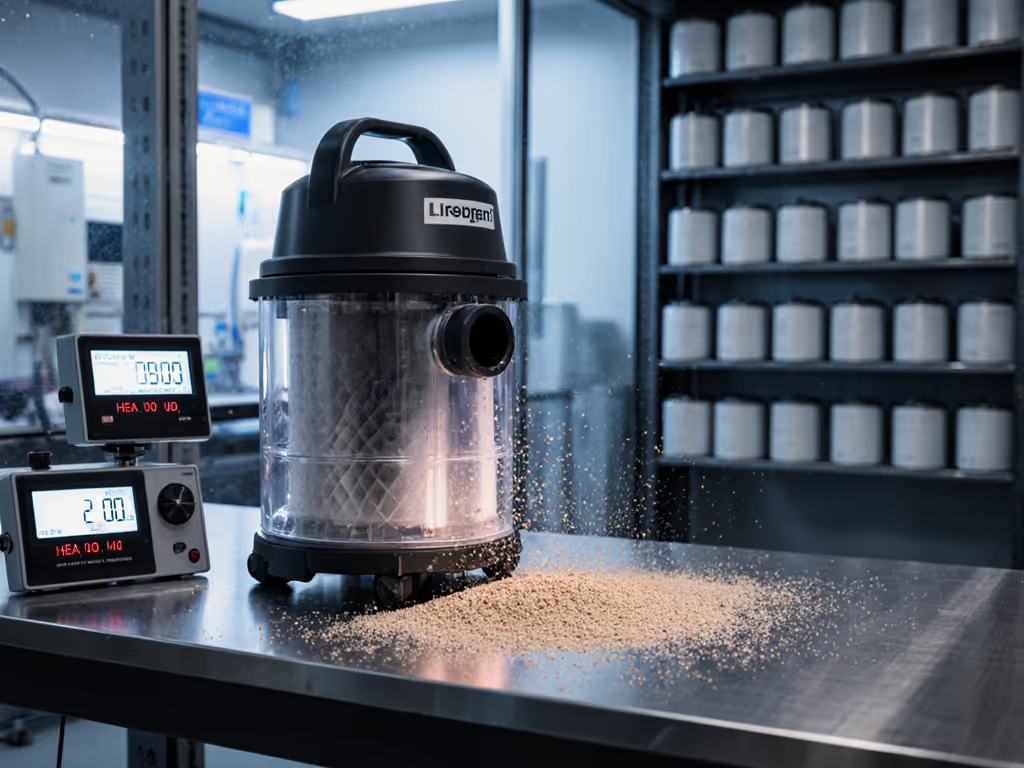
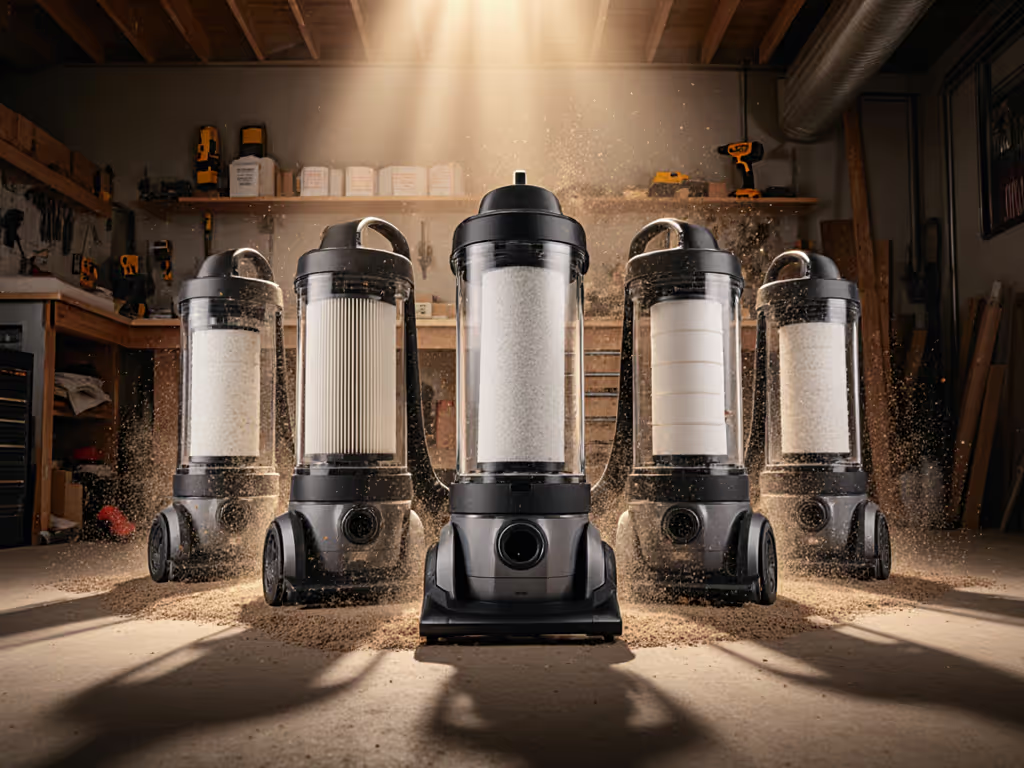
When you're sanding drywall or grinding concrete, finding the best vacuum with a HEPA filter means looking beyond glossy packaging to verify HEPA certification-tested performance (especially when handling hazardous dust on job sites). Too many contractors learn the hard way that a "HEPA" label alone won't protect your crew from silica exposure or save your reputation when dust puffs across freshly installed cabinets. Smooth workflow beats specs if the vac tips or clogs, and I've seen too many jobs compromised by filtration failures that seemed preventable with proper verification.
The HEPA Headache You Didn't Sign Up For
Marketing Claims vs. Real-World Hazards
That "True HEPA" sticker on your dust extractor? It might be completely meaningless. As a renovation lead running vacs daily across demo and remediation sites, I've learned the hard way that manufacturers can legally use "HEPA" on filters without any independent verification. According to industry watchdogs like IQAir, "there is no requirement that household air purifiers are tested to meet HEPA standards" and "no independent body is required to test or verify the HEPA claim." This regulatory gap creates serious risk for professionals working under OSHA's silica standards, where improper filtration is not just inconvenient, it is a compliance violation waiting to happen. See our OSHA silica vacuum guide for compliant concrete and masonry setups.
Picture this: You're cleaning up after concrete grinding, confident in your "HEPA" vacuum. But when you change the filter, fine dust puffs into the air, your coworkers start coughing, and that client who specifically requested certified equipment starts questioning your professionalism. This isn't hypothetical; it's what happened to a colleague who trusted marketing over verification. The fallout? A $5,000 callback for proper cleanup and a damaged reputation that took months to rebuild.
Why "HEPA" Alone Doesn't Cut It
Most contractors don't realize there are multiple HEPA standards with wildly different performance requirements. The term "HEPA" technically refers to filters capturing 99.97% of particles at 0.3 microns, but here's what manufacturers won't tell you:
- IEST-RP-CC001.4 (US standard): Requires testing at 0.3 microns using thermal DOP
- EN 1822 (European standard): Tests at MPPS (Most Penetrating Particle Size), which varies by filter
- "True HEPA": Marketing term with no regulatory definition
- "HEPA-like": Essentially means "not HEPA"
The critical difference? A filter meeting European EN 1822 standards might technically qualify as HEPA with 85% efficiency, while US IEST standards require 99.97%. That gap represents millions of additional particles escaping into your workspace (and potentially your crew's lungs).
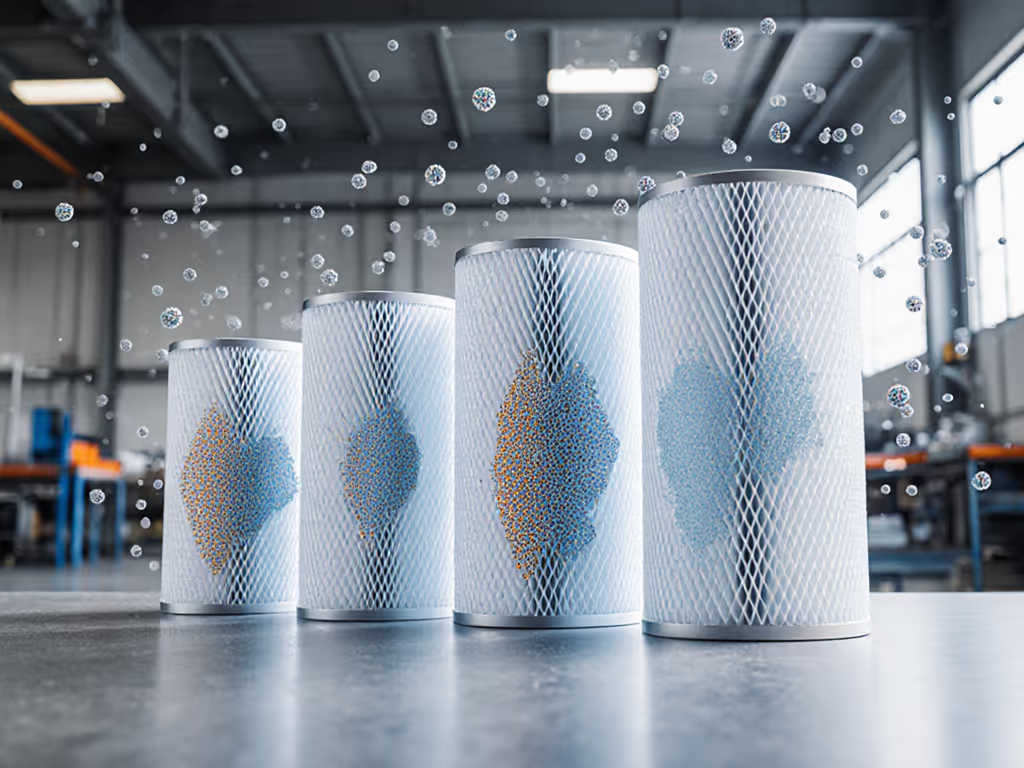
What Actually Matters for Job-Site Safety
Decoding Real HEPA Performance Metrics
When selecting the best vacuum with a HEPA filter, skip the marketing fluff and verify these three critical elements:
- Independent lab certification: Look for documentation showing testing by a third-party lab like Nelson Labs or Intertek
- Full-unit testing: Many vacs have HEPA filters but bypass leakage elsewhere (hose connections, seams). Festool's CT HEPA extractors, for example, are "full unit" certified, meaning all air passes through the filter Pros who want model-level details can see our Festool CT 15 E review.
- Stability integrated with filtration: A HEPA-certified vac that tips over during a client walkthrough is worse than useless, it is actively damaging your credibility
Here's a practical filter efficiency comparison framework I use on every job:
| Feature | "HEPA" Marketing Claim | Independently Certified HEPA | What This Means On Site |
|---|---|---|---|
| Particle Capture | "Removes 99.9% of allergens" | 99.97% @ 0.3 microns verified | Prevents silica exposure during concrete grinding |
| Air Path Integrity | No documentation | Full-unit leakage testing ≤0.01% | No dust blow-by when changing bags near clean areas |
| Filter Testing Method | "Meets HEPA standards" | IEST-RP-CC001.4 or EN 1822 certified | Ensures compliance with OSHA's silica requirements |
| Stability Design | Tall canister with small base | Low-center design with anti-tip features | Prevents catastrophic spills during client walkthroughs |
HEPA vs Standard Filters: When It's Not Optional
Many contractors waste money on HEPA when standard filters would suffice, or worse, risk compliance violations by using inadequate filtration. For a deeper breakdown, read our filter comparison. Here's my field-tested decision guide:
-
Use HEPA-certified vacuums when:
-
Handling lead paint, asbestos, or mold remediation (required by EPA RRP)
-
Grinding concrete (OSHA silica rule requires HEPA filtration below 25 μg/m³)
-
Working in occupied spaces with immunocompromised occupants
-
Client specifications explicitly require certified HEPA
-
Standard filters may suffice when:
-
General drywall sanding (with proper pre-separator for large dust)
-
Woodworking with low-respirable dust
-
Cleanup of non-hazardous materials in unoccupied spaces
The key difference? HEPA filters capture particles down to 0.3 microns (the size most dangerous to human lungs). Standard filters might catch 90% of visible dust but miss the invisible particles that cause long-term respiratory damage. On my last hospital renovation, we switched from standard to certified HEPA after an air quality test showed dangerous levels of ultrafine particles despite "clean"-appearing air.
Choosing with Confidence: Your Action Plan
The 3-Minute Certification Verification Checklist
Before you buy or specify a HEPA vacuum, run this verification before it hits your job site:
- Demand the test report: "Independent certification" isn't enough, ask for the specific lab report showing:
- Testing to IEST-RP-CC001.4 or equivalent
- Full-unit rather than just filter testing
- Results at 0.3 microns (not just "HEPA standard")
- Check for integrity under pressure: A HEPA filter means nothing if air leaks around it. Perform this field test:
- Seal all openings except inlet
- Run vacuum with HEPA filter installed
- Hold smoke pencil near seams, hose connections, and filter housing
- Pass: No smoke escapes after 30 seconds
- Fail: Replace the unit, because bypass leakage is compromising your filtration
- Verify stability with your workflow: The best vacuum with HEPA filter must stay upright during your specific tasks. Before buying:
- Load it with your typical accessories
- Test it on your actual job-site surfaces (scaffolding, uneven floors)
- Bump it gently as if during normal movement
- Pass: Remains stable through normal workflow motions
- Fail: Requires redesign, consider a shorter hose, a lower profile unit, or a weighted base
Building Your Certified HEPA Workflow
On my crew, we've standardized a pre-job checklist that prevents 90% of filtration failures:
Pre-Flight Setup:
- Confirm OSHA requirements for the specific material (silica, lead, etc.)
- Select filter based on hazard level (standard, HEPA, or specialty)
- Verify hose length doesn't exceed 15 feet (longer hoses reduce effective CFM) For the physics and best practices, see our hose performance guide.
- Install anti-static hose if working near electronics or fine finishes
- Secure tools with velcro straps to prevent tipping hazards
During Operation:
- Check filter gauge every 15 minutes (sudden drops indicate clogs)
- Use pre-separator for >50% large-particle jobs (drywall, wood)
- Keep wet/dry models on 'dry' mode until water contact is confirmed
- Never exceed 70% bag capacity for HEPA models (reduces airflow)
Teardown Protocol:
- Seal used filters in double Ziploc bags before removal For proper handling, follow our filter disposal guide.
- Wipe exterior with damp microfiber (never dry wipe HEPA units)
- Store filters in airtight containers away from temperature extremes
- Document filter hours for replacement tracking
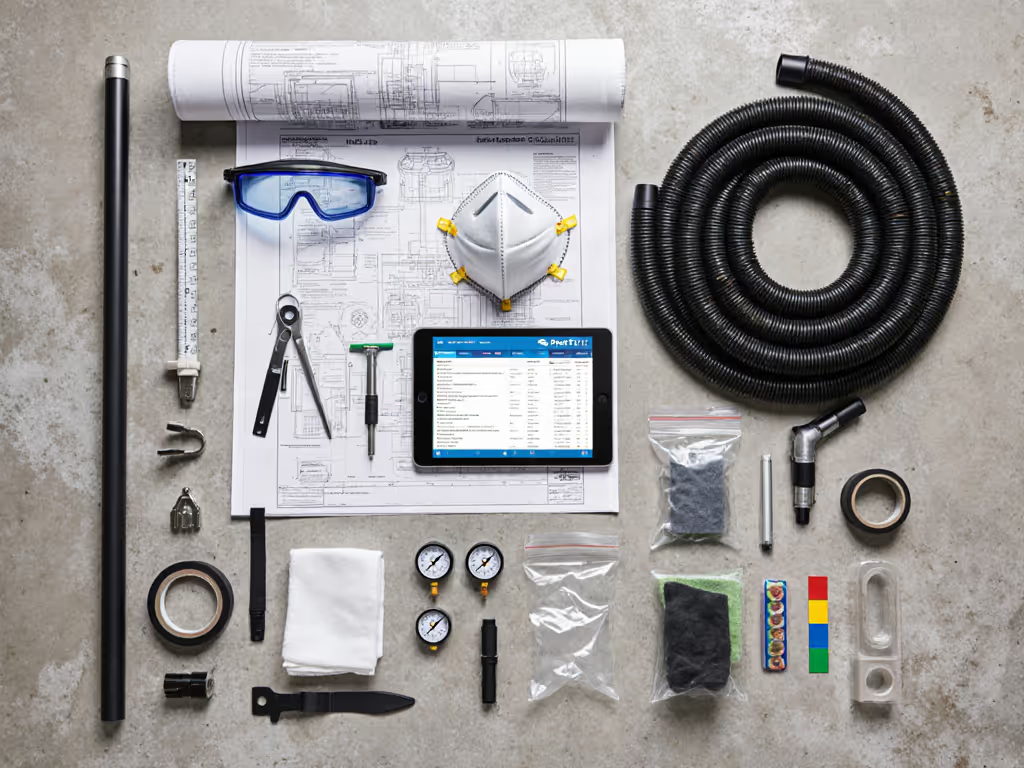
Set it up right, then forget it, until your pre-flight check reminds you otherwise.
Your Next Step Toward Certified Confidence
Stop gambling with "HEPA" claims that could put your crew's health and your business at risk. Today, pick one vacuum in your fleet and run the 3-minute certification verification checklist. If it passes with documented proof, you've got a certified HEPA model you can trust for hazardous work. If not, contact the manufacturer and demand the test reports, because no legitimate HEPA provider should hesitate to share them.
Remember the golden rule I learned after that drywall dust incident: A vac that stays upright keeps your reputation upright. True HEPA certification-tested performance isn't just about meeting standards, it is about earning trust on every job. When your equipment works as certified and stays stable through your workflow, you're not just compliant, you're the professional clients call when the job matters.
The next time you're specifying equipment, ask not just "Does it say HEPA?" but "Where's the independent certification?" Your crew's lungs (and your bottom line) will thank you.
Set it up right, then forget it
Related Articles