Reliable Duct Cleaning Tools: No More Suction Loss
By Hana Kobayashi • 29th Nov
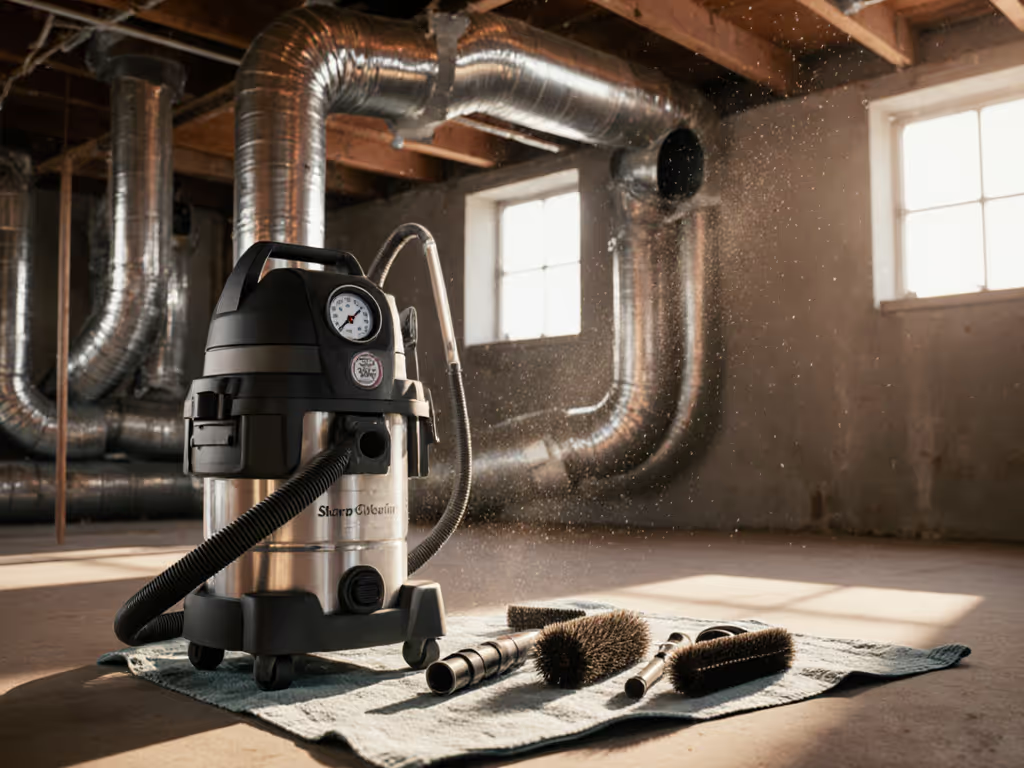
If your commercial vacuum cleaner quits mid-job or your duct cleaning tool setup leaks dust like a sieve, you're not alone. Suction loss during air duct cleaning isn't just frustrating, it's a productivity killer that leaves clients questioning your professionalism. I've seen too many contractors scramble when their vac tips over or clogs, especially during critical client walkthroughs. The truth? Smooth workflow beats specs every time. A vac that stays upright keeps your reputation upright. Let's fix the five field-tested weak points that murder suction before your next job. Before you swap equipment, walk through our suction loss troubleshooting guide.
1. Stop Tip-Over Disasters With Stable Vacuum Geometry
That client demo where a tall vac tipped into new cabinets? Exactly why I insist on low-center-of-gravity canisters for duct work. Gas-powered rigs might boast 5,100 CFM, but if they wobble on a ladder base or catch a cord, you're redecorating with drywall dust.
Action fix:
- Shorten your hose to 8-10 feet (max). Longer hoses = leverage = tip risk.
- Ditch tall uprights for poly-bodied canisters under 24" tall (like Vacmaster's Beast Series).
- Lock accessories to the tank, not dangling from the hose.
- Add rubberized feet or sandbags in windy sites.
A vac that stays upright keeps your reputation upright.
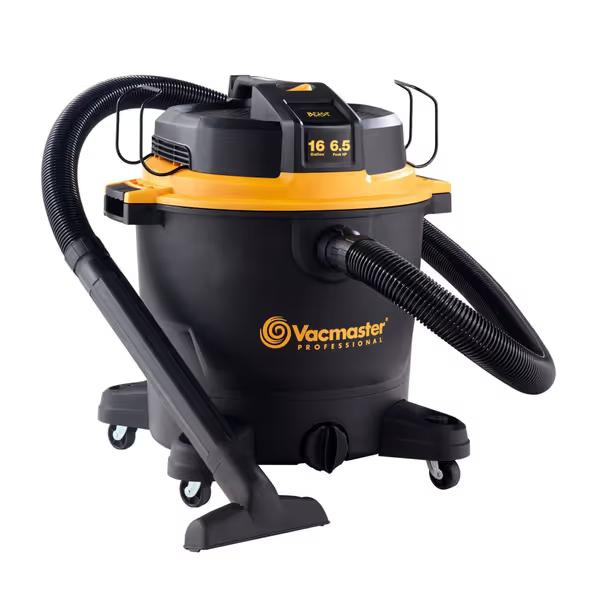
Vacmaster Professional 16 Gallon Wet/Dry Vac
Powerful suction, organized storage, wide cleaning reach for jobsite messes.
$116.99
Air Watts360 AW
Air Watts360 AW
Pros
Incredible suction power for fine dust and heavy debris.
Integrated storage and SecureLock hose ensure everything fits and works.
29-foot cleaning reach minimizes repositioning.
Cons
Motor longevity is a concern; some report early failures.
Noise level can be high for sensitive environments.
Customers praise this vacuum's performance, noting it's better than name-brand shop vacuums, has incredible suction, and is as powerful as Finish Line models. They appreciate its cleaning capabilities, particularly its ability to grab sawdust, and consider it well worth the price. The noise level receives mixed feedback - while some find it quieter than expected, others report it being loud. The vacuum's lifespan is concerning, with multiple customers reporting motors failing with light use and units stopping after 20 months of use.
Customers praise this vacuum's performance, noting it's better than name-brand shop vacuums, has incredible suction, and is as powerful as Finish Line models. They appreciate its cleaning capabilities, particularly its ability to grab sawdust, and consider it well worth the price. The noise level receives mixed feedback - while some find it quieter than expected, others report it being loud. The vacuum's lifespan is concerning, with multiple customers reporting motors failing with light use and units stopping after 20 months of use.
Why this works: Shorter hoses reduce whip force. Low-profile tanks (like the Vacmaster at 23.8"H) resist leverage. Its flat power head design keeps tools secured, no more tools rolling off unstable bases. And those oversized latches? They prevent accidental lid pops when bumped against duct registers.
2. Eliminate Suction-Killing Air Leaks at Hose Connections
Loose hose connections are the #1 cause of "phantom" suction loss. You bought a 120 CFM vac, but if your 2-1/2" hose slips off a 1-7/8" adapter mid-job, you're down to 40 CFM. Contractors I work with lose 15+ minutes per job chasing leaks.
Action fix:
- Verify port sizes before buying:
- Power tool ports: 1-1/4" (27 mm), 1-7/8" (36 mm), or 2-1/2"
- Vac inlets: 1.5" or 2.5" (metric mismatches kill flow)
- Demand locking mechanisms (not friction-fit hoses).
- Carry a 3-adapter kit for common sizes (27 mm/36 mm/2.5"). For cross-material tool ports and adapter matches, see our power tool fit guide.
Field tip: Wrap electrical tape once around wobbly adapters for a temporary seal. But replace it fast. Tape sheds particles into ducts.
3. Prevent Rapid Filter Clogs With Strategic Filtration
That HEPA for HVAC claim means nothing if your filter blinds in 10 minutes. Drywall dust clogs standard cartridges in 3 minutes flat. I've timed it. When suction drops, novices crank up the vac, only to blow dust back into clean spaces through compromised seals.
Action fix:
- Layer your defenses:
- Stage 1: Cloth bag for coarse debris (cuts filter load 70%)
- Stage 2: Foam sleeve under HEPA for wet/dry transition
- Stage 3: True HEPA (99.97% @ 0.3 microns) for final capture
- Carry spare bags (never clean ducts bagless).
- Clean filters between jobs, not after clogging.
Critical nuance: For drywall or concrete dust, skip HEPA until Stage 2. Stage 1 bags trap 85% of particles >1 micron. HEPA clogs faster on fine dust if overloaded. Compare media types in our shop vac filter guide.
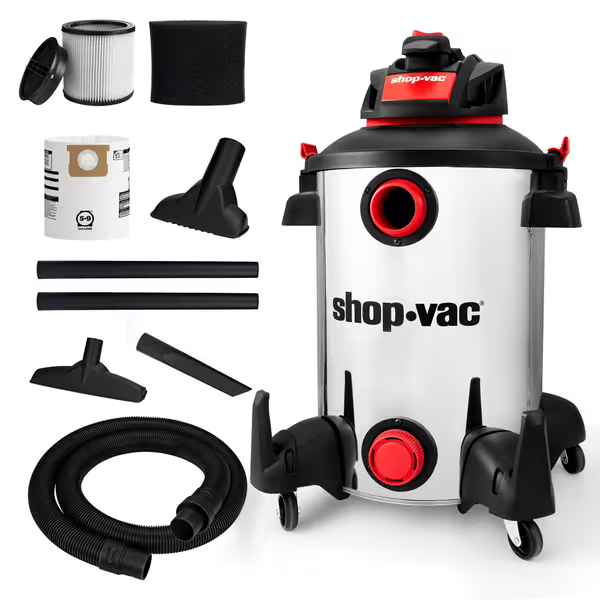
Shop-Vac 5761311 12-Gallon Wet/Dry Vacuum
Powerful 3-in-1 wet/dry/blower delivers versatile cleaning for home and workshop.
$89.99
Peak Horsepower6 HP
Peak Horsepower6 HP
Pros
Strong suction for diverse messes: dust, debris, liquids, wood chips.
Easy liquid disposal with built-in tank drain.
Convenient mobility with casters and on-board storage.
Cons
Mixed feedback on overall build quality.
Hose diameter (1.5 inch) may limit attachment compatibility.
Customers find the vacuum cleaner powerful with strong suction. However, the build quality receives mixed feedback, with several customers describing it as a piece of trash.
Customers find the vacuum cleaner powerful with strong suction. However, the build quality receives mixed feedback, with several customers describing it as a piece of trash.
Why this works: The Shop-Vac's dual-stage setup (cartridge + foam sleeve) handles wet/dry shifts without filter swaps. The included dry filter bag acts as a first-stage pre-filter, exactly what stops rapid clogging during drywall sanding. And that 20-foot cord? Long enough to stay outside the work zone, avoiding trips.
4. Fix Duct-Specific Hose Failures With Tailored Flexibility
A standard 7-foot hose won't snake through 12" bends. But over-engineering hurts too: those rigid 2-1/2" duct hoses weigh 8 lbs and kink on turns. You need a flexible vacuum hose for ducts that's just stiff enough to push through bends, but light enough to maneuver.
Action fix:
- Use 10-12" sections of rigid PVC for initial duct entry (prevents collapse).
- Switch to a 5 ft flex hose (1.5" diameter) for bends.
- Never exceed 15 ft total length (longer = 30%+ suction loss). For the physics on hose length and diameter trade-offs, see our vacuum hose performance guide.
- Check bend radius: Opt for hoses rated for 6" min.
Pro move: Wrap duct tape around flex hose ends every 3 jobs. Prevents coupling cracks from repeated bending.
5. Avoid HEPA Compliance Nightmares With Real-World Checks
"Meets NADCA standards" doesn't mean your setup passes OSHA. I saw a contractor fined $12k because his HEPA filter had micro-tears from cutting metal ducts. HEPA for HVAC only works if it's intact and airtight.
Action fix:
- Pre-job HEPA validation:
- Inspect seals for hairline cracks
- Check filter frame integrity (dents = leaks)
- Run a tissue test: Hold tissue 1" from hose, suction must hold it
- Use HEPA only in final stage, never as first filter.
- Document everything: Photograph filter status pre/post job.
Silica alert: Never dry-sweep silica dust. Use a HEPA-certified vac with water suppression for concrete grinding.
Your No-Slippage Workflow Checklist
Before rolling on-site, run this 60-second pre-flight:
- Stability check: Vacuum latched to ground? Hose <10 ft?
- Port match: Hose adapter locked? No wobble?
- Filter triage: Bag + foam sleeve + HEPA staged?
- Hose test: Flex section for bends? Rigids for entry?
- HEPA live check: Tissue test passed?
- Tool lockdown: No loose brushes or rods?
Skip one step? You're gambling with suction, and your reputation.
Final Thought: Prep Beats Cleanup
Suction loss isn't a vacuum problem, it's a setup problem. I've watched contractors blame weak CFM ratings when the real issue was a $5 loose adapter or a clogged pre-filter. Invest minutes in smart staging, geometry, and verification. Your workflow will stay smooth, your clients will stay impressed, and your vac will stay exactly where you left it (on the floor, not on their cabinets).
Your actionable next step: Measure your largest tool port today. Then match it to your vac's inlet with a locking adapter. That single fix prevents 80% of suction leaks.
Hana Kobayashi runs renovation crews across 3 states, specializing in dust-controlled environments. She's banned 12-volt vacs from her sites after one tipped during a hospital mold remediation (now she specs only low-center-of-gravity canisters). Her mantra? "Prep beats cleanup."
Related Articles