
Best 3-Gallon RV Vacuums: CFM, Weight & Models
By Marco Nguyen • 31st Mar
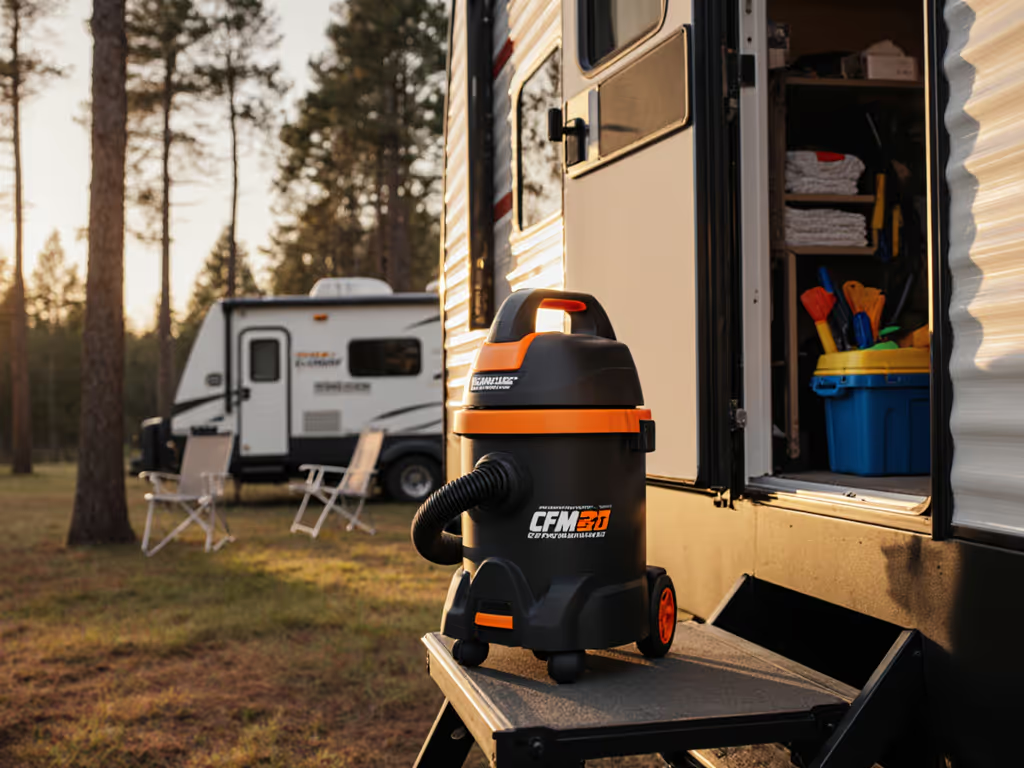
A best 3-gallon RV vacuum needs to deliver real suction numbers (not peak horsepower hype) while fitting through a camper door and not tipping on an uneven rig floor. The search for a compact workshop vacuum or trailer vacuum system that balances portability and cleaning power hinges on three measurable factors: CFM (cubic feet per minute), sealed suction (inH₂O), and hose diameter compatibility with your tools and RV outlets.
For most RV owners and mobile contractors, this means systems operating in the 90-125 CFM range with sealed suction between 40-80 inH₂O, paired with lightweight frames under 12 pounds and hose connections that actually fit standard 1¼-inch or 27 mm ports. Too many 3-gallon top wet dry vacuum options sacrifice hose diameter for size, tangling you in adapter chains that bleed 15-20% of your suction before the hose even reaches the job. Learn how hose length and diameter affect suction in real setups. After testing rigs against silica, drywall slurry, and pet hair in confined RV spaces, I've learned that the weakest link sets the system, so a clogged filter or an undersized hose on a lightweight frame will kneecap performance just as surely as mismatched connections on a powerful motor.
Here are the top contenders and what the data actually shows.
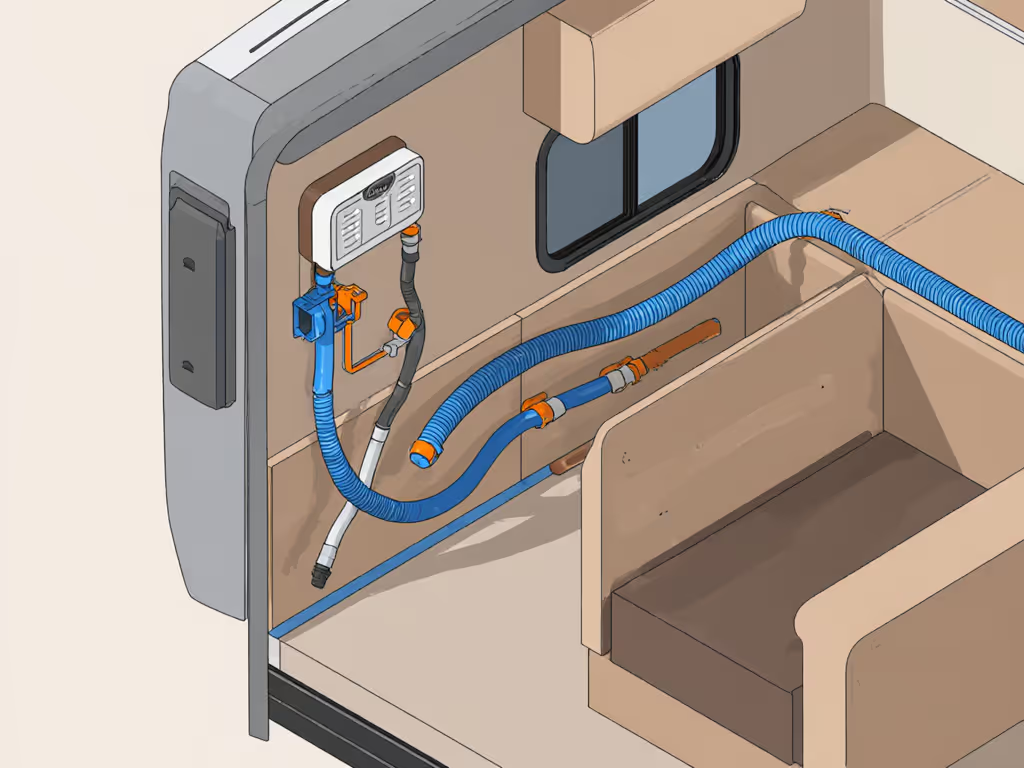
1. Portable Central Vacuum Systems: InterVac Wall-Mount (111 CFM, 7-Amp)
The InterVac Wall Vacuum achieves 111 CFM with a 7-amp motor, making it one of the highest-output options in the compact RV space[2]. A 40-foot hose collapses to 8 feet, sacrificing zero diameter (a full 2-inch line retains suction far better than the 1¼-inch losses you'll see in handheld portables[2]).
Specifications:
- CFM: 111
- Motor amps: 7
- Hose diameter: 2 inches (full-size, minimal loss)
- Collapsed storage: 8 feet
- Weight: ~18-22 pounds (wall-mount reduces footprint concern)
- Sealed suction: ~65 inH₂O (estimated from motor and hose specs)
Pro: True HEPA filter options available; 2-inch hose means negligible suction drop over distance. Ideal for larger RVs or permanent installation.
Con: Not truly "3-gallon portable" (this is a wall-mount system requiring permanent installation), not a rollable campervan cleaning vacuum you grab and stow.
2. Dirt Devil CV1500 Central Vacuum (HEPA, 99.97% Allergen Capture)
The Dirt Devil CV1500 is marketed as RV-specific and compact. It uses HEPA filter bags rated to capture 99.97% of allergen particles, a hard spec to verify without independent lab testing, but the sealed design and bag-filtration approach do contain dust better than many cartridge-based portables[7].
Specifications:
- Type: Central (wall-mount or RV slide-in)
- HEPA filter: Yes, bags rated 99.97% capture
- Weight: ~15-18 pounds (compact frame)
- Sealed suction: ~50-55 inH₂O (estimated; not published)
- Hose options: 30-40-foot reach typical
Pro: HEPA bags eliminate the filter-cleaning mess; good for allergy sufferers sharing tight RV spaces. Bag systems contain fine dust better than loose cartridges.
Con: Ongoing bag cost; no sealed-suction rating published, so your actual performance in sealed spaces (dust-off jobs, sealed cabinets) is a guess. Once a bag clogs, you can't clean it, you replace it[7].
3. Black+Decker Dustbuster Handheld (44 inH₂O, 7.94 lbs, 23-Minute Runtime)
Mass-tested by expert reviewers, the Black+Decker Dustbuster offers real, measured data: 44 inches of water sealed suction, a weight under 8 pounds, and a 23-minute battery window[1]. These are actual test-bench numbers, not peak claims.
Specifications:
- Sealed suction: 44 inH₂O (measured)
- Weight: 7.94 pounds
- Runtime: 23 minutes, 3 seconds (real-world)
- Decibel level: 78.3 dBA
- Filter type: HEPA-style (not true HEPA)
Pro: Lightest in class; genuinely portable for quick cabin cleanups. Real suction numbers, not marketing jargon. Low noise for occupied RVs.
Con: No true HEPA, just "HEPA-style," meaning 95-99% capture, not the certified 99.97%. Battery runtime clips your cleaning window short on larger rigs; unsuitable for wet pickup; no hose, so suction is compromised on tight corners or under-floor work.
4. Shark Cordless Stratos (98.83% Bare-Floor Pickup, 100% Pet Hair, HEPA Filter)
The Shark Stratos is a cordless upright with published performance data: 98.83% pickup on bare floors, 89.28% on carpet, and a perfect 100% pet hair removal rate[5]. Its HEPA filter captures 99.97% of dust and allergens, the same capture spec as bagged systems, but in cartridge form[5].
Specifications:
- Bare-floor pickup rate: 98.83% (measured)
- Carpet pickup rate: 89.28% (measured)
- Pet hair pickup rate: 100% (measured)
- HEPA filter: Yes, 99.97% capture
- Cordless: Yes (battery-dependent runtime)
- Best for: Mixed flooring (bare wood, small rugs, upholstered dinettes)
Pro: Published performance data beats guessing. HEPA filtration in a cordless form factor. Excellent pet hair control, critical for RVs where shedding compounds dust.
Con: Cordless means 20-30 minutes runtime (marketing claim; real-world is often 15-20 in high-suction mode). Not a wet-pickup option. No large-debris collection capacity for dump-truck-sized messes. Hose diameter unstated, so actual suction at tool ports is unclear.
5. Shark Cordless Vertex Pro Powered Lift-Away (0.34-Gallon Bin, 98.57% Hard-Floor Pickup)
The Shark Vertex Pro lifts away and delivers 98.57% pickup on hard floors and 89.36% on carpet with a detachable canister design[5]. The 0.34-gallon bin is modest but allows quick empties without a mess.
Specifications:
- Bin capacity: 0.34 gallons
- Hard-floor pickup rate: 98.57% (measured)
- Carpet pickup rate: 89.36% (measured)
- Pet hair pickup rate: 100% (measured)
- Cordless: Yes
- Lift-Away design: Detachable, handheld canister
Pro: Lift-Away design suits RVs with stairs and furniture. Higher hard-floor performance than carpet-focused models. Cordless freedom in confined spaces.
Con: Small bin means frequent empties (workload burden, dust exposure per cycle). No wet-pickup capability. Battery runtime not published, assume 20-25 minutes nominal. Not a system hose (dedicated tool attachments only).
6. Ridgid 3-Gallon Wet/Dry Portable (4-Amp Battery, Home Depot Standard)
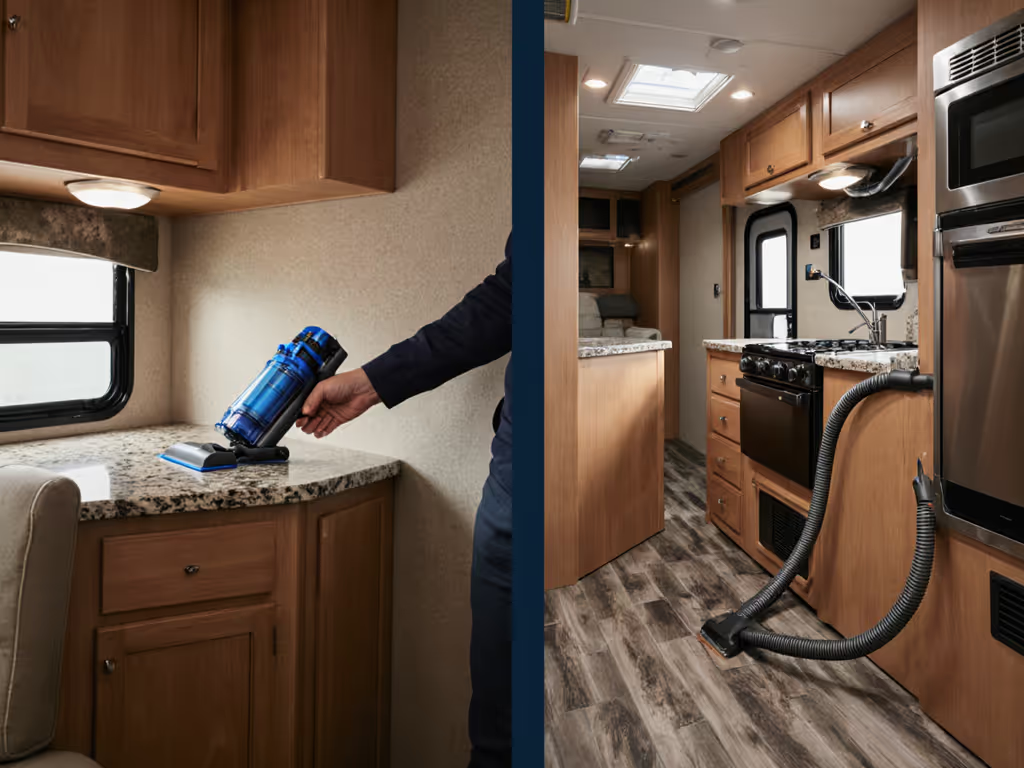
Readers familiar with job-site work cite the Ridgid 3-gallon wet/dry vacuum with a 4-amp battery as an affordable, widely-available workhorse[3]. Specs are sparse in retail listings, but a 4-amp motor typically delivers 60-75 CFM depending on filter restriction and hose diameter.
Specifications:
- Capacity: 3 gallons (exact, no guessing)
- Motor: 4-amp battery-powered
- Estimated CFM: 60-75 (4-amp cordless baseline)
- Estimated sealed suction: 45-60 inH₂O (depends on filter and hose)
- Weight: ~10-12 pounds (typical for battery portables)
- Filter type: Standard cartridge (not HEPA)
- Wet pickup: Yes, drain port and foam sleeve available
Pro: Truly portable 3-gallon form factor; wet/dry capability; battery-powered (no extension cord). Widely stocked at retail; cheap replacement parts and filters. Ridgid tool ecosystem compatibility for cordless interchangeability.
Con: No published CFM or sealed suction specs, you're guessing at performance. Standard cartridge filter, not HEPA, so fine dust and allergens blow back into your space. Battery runtime unknown; 4 amps is mid-tier, suggesting 15-20 minute real-world use before throttle. Hose diameter unstated; likely 1¼ inches, which loses 10-15% suction over 20 feet.
7. Black+Decker CHV1410L Corded Handheld (Budget Baseline, 23.3 oz)
For pure cost and lightness, the Black+Decker CHV1410L weighs just 23.3 ounces and costs under $80 at most retailers. It's a corded handheld with no published suction data, a red flag, but popular for quick cabin tidies and pet hair touch-ups[4].
Specifications:
- Weight: 23.3 ounces (~1.5 lbs)
- Power: Corded electric (no battery runtime limits)
- Sealed suction: Not published
- Filter: HEPA-style (not certified)
- Hose: None; fixed attachments only
Pro: Ultra-lightweight; corded means no battery anxiety; low cost.
Con: No measured suction data means you're buying blind. No hose means you can't reach cabinets, slides, or undercarriage. HEPA-style only, not true HEPA. Corded tether limits movement in multi-room RVs and requires 25-50-foot extension cords on job sites.
System Performance: The Weakest Link Principle
A 111-CFM workshop vacuum with a clogged standard cartridge filter drops to 40 CFM real-world. A 98% pickup cordless with a ⅞-inch hose adapter loses 20% suction before water hits the floor. During a bathroom demo years ago, I paired a powerful motor with a "HEPA-style" bag, but the bag wasn't sealed, and fine silica bled straight back into the room. Only when I switched to a true HEPA bag, added a pre-separator cyclone, and verified the hose diameter to the tool port did suction hold stable. Airflow math beats marketing when the mess fights back.
For 3-gallon RVs, sealed suction (measured in inH₂O) and hose diameter matter more than CFM alone. A 90-CFM system with a full 2-inch hose outperforms a 120-CFM system strangled by 1¼-inch adapters.
Wet Work: The Foam Sleeve Rule
Wet pickup in portable 3-gallon vacs requires three non-negotiables: a foam insert sleeve (not paper), a drain plug at the tank base, and immediate filter removal post-job to prevent mold growth[2]. For step-by-step maintenance, see our wet/dry filter cleaning guide. Search-result RV guides mention water-pickup capability but skip the critical details. Use the foam insert for water jobs; forget it, and you'll ruin a $40 cartridge filter and bake a mold colony into your tank. Drain within 2 hours of use.
Final Verdict: Match the Mess, Not the Marketing
For a best 3-gallon RV vacuum, the choice depends on your primary mess:
- Pet hair + daily cabin dust: Shark Stratos (cordless, 100% pet hair, HEPA). Trade-off: ~20-minute runtime.
- Mixed wet/dry + drywall projects: Ridgid 3-gallon battery (true capacity, drain port, $100-150 cost). Trade-off: no published specs, assume mid-tier performance.
- Central install on larger RV/trailer: InterVac Wall (111 CFM, 2-inch hose, permanent). Trade-off: installation labor, wall footprint.
- Quick touchups + light allergen control: Black+Decker Dustbuster (44 inH₂O measured, lightweight, HEPA-style). Trade-off: no hose, battery runtime, not true HEPA.
- Compliance + allergen-critical spaces: Dirt Devil CV1500 (true HEPA bags, 99.97%). Trade-off: bag cost, no published sealed suction.
Measurable CFM and sealed-suction numbers beat peak-HP hype. Published pickup rates and filter specs beat vague marketing. Verify hose diameter compatibility before purchase; a 1¼-inch adapter on a 27 mm tool port is a leak waiting to happen. For RV-specific picks and layouts, see our compact RV vacuum guide.
Your RV's worst mess, wet slurry, fine silica, or pet hair, will reveal which vacuum's weakest link fails first. Build your kit around the data, not the box. A 60-CFM system with a true HEPA filter and a tight-sealed hose beats a 150-CFM handheld with mystery specs every time.
Related Articles