Industrial Vacuum Safety: Pharma vs Construction Truths
By Aisha El-Sayed • 22nd Nov
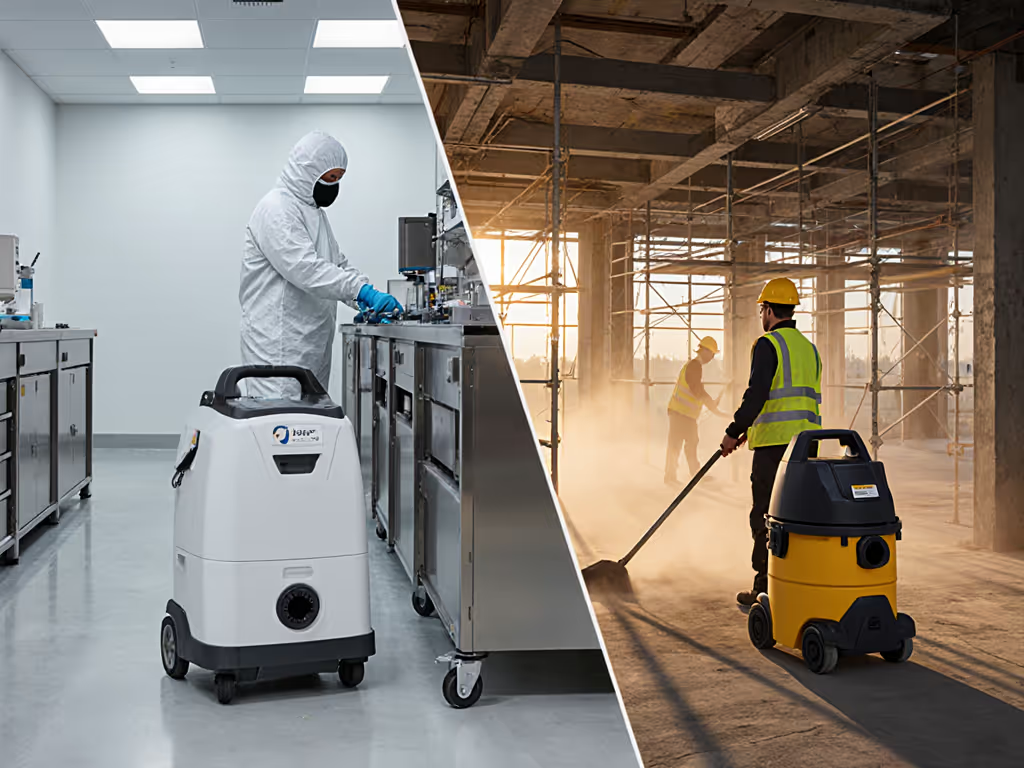
When your industrial vacuum setup fails during a critical job, the consequences aren't just messy, they are measurable in fines, health costs, and lost trust. As a former site safety coordinator, I've seen how the right construction dust vacuum protects crews from silica exposure while pharmaceutical vacuum systems prevent million-dollar contamination events. Both environments demand rigorous containment, yet their approaches differ fundamentally. Let's clear the air between these two worlds with practical checklists that actually pass inspections. For a broader safety overview of electrical, chemical, and dust risks, see our shop vac safety guide.
Why One Vacuum Doesn't Fit Both Worlds
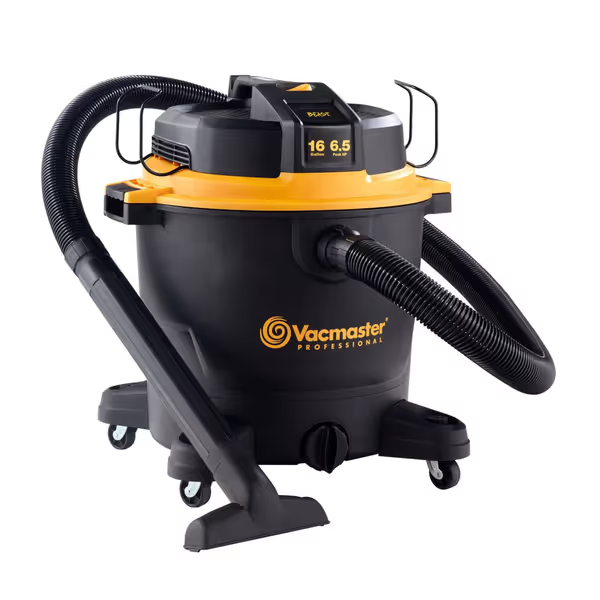
Vacmaster Professional 16 Gallon Wet/Dry Vac
Powerful suction, organized storage, wide cleaning reach for jobsite messes.
$116.99
Air Watts360 AW
Air Watts360 AW
Pros
Incredible suction power for fine dust and heavy debris.
Integrated storage and SecureLock hose ensure everything fits and works.
29-foot cleaning reach minimizes repositioning.
Cons
Motor longevity is a concern; some report early failures.
Noise level can be high for sensitive environments.
Customers praise this vacuum's performance, noting it's better than name-brand shop vacuums, has incredible suction, and is as powerful as Finish Line models. They appreciate its cleaning capabilities, particularly its ability to grab sawdust, and consider it well worth the price. The noise level receives mixed feedback - while some find it quieter than expected, others report it being loud. The vacuum's lifespan is concerning, with multiple customers reporting motors failing with light use and units stopping after 20 months of use.
Customers praise this vacuum's performance, noting it's better than name-brand shop vacuums, has incredible suction, and is as powerful as Finish Line models. They appreciate its cleaning capabilities, particularly its ability to grab sawdust, and consider it well worth the price. The noise level receives mixed feedback - while some find it quieter than expected, others report it being loud. The vacuum's lifespan is concerning, with multiple customers reporting motors failing with light use and units stopping after 20 months of use.
FAQ: What are the core differences between pharmaceutical vacuum systems and construction dust vacuums?
Pharmaceutical vacuum systems and construction dust vacuums serve distinct purposes through different risk lenses:
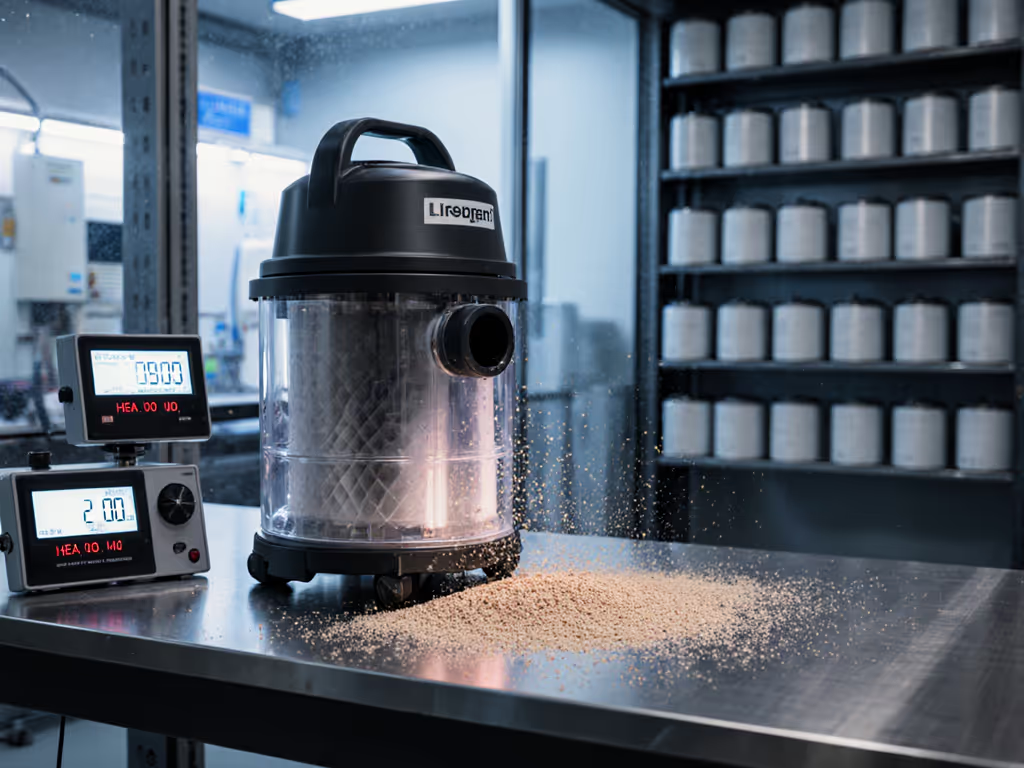
- Pharma systems prioritize product integrity: preventing cross-contamination between batches of medicines where a single particle can spoil entire production runs
- Construction vacs focus on worker protection: capturing hazardous silica from cutting operations before it enters lungs
This distinction creates divergent requirements mapping:
- Pharma requires ISO Class 4-8 cleanroom compatibility (depending on area classification)
- Construction demands OSHA silica compliance with verified HEPA filtration (minimum 99.97% at 0.3 microns)
Both solve containment problems but through different exposure scenarios. I recall a masonry crew on my site getting cited after dry cutting created a dust cloud, and their vac lacked proper HEPA filtration. Simple fix: we built a labeled kit with a HEPA bag, a certified filter, taped joints, and a shroud. Surprise inspections since then have been non-events.
FAQ: Why can't construction crews just use pharmaceutical-grade vacuums?
While pharmaceutical vacuum systems offer superior filtration, they're engineered for different operational realities:
| Requirement | Pharma Vacuum Systems | Construction Dust Vacuums |
|---|---|---|
| Material Handling | Fine powders (mg quantities) | Heavy debris (kg quantities) |
| Daily Workflow | Batch processing in controlled rooms | Continuous use in dynamic environments |
| Critical Failure | Product contamination (financial loss) | Silica exposure (health consequences) |
| Filter Maintenance | Scheduled during production downtime | Must work reliably between jobs |
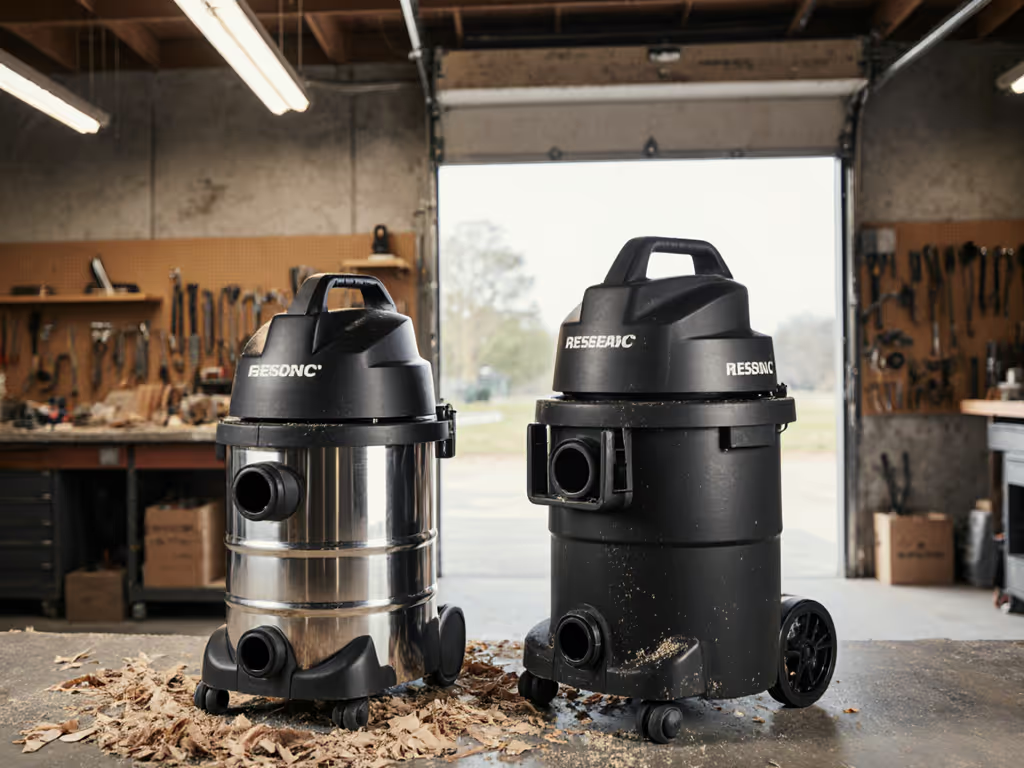
Construction crews need ruggedness equal to their filtration. That Vacmaster Beast series mentioned above demonstrates the right balance: a true HEPA filter engineered into the system (not an afterthought), with features like its dust-sealed switch and large drain port addressing real-world job site needs. When contractors misuse regular shop vacs for concrete work, they violate OSHA's silica standard, with penalties of $15,092 per violation that add up fast. For tool-specific setups and compliance tips, use our OSHA-compliant silica dust vacuum guide.
If it isn't captured, it gets inhaled
FAQ: How do HEPA requirements actually differ between these environments?
Both industries require HEPA filtration, but verification differs:
Pharmaceutical vacuum systems must prove:
- ULPA filtration (99.999% at 0.12 microns) for potent compounds
- Filter integrity testing per IEST-RP-CC034
- Upstream AND downstream filtration to prevent motor emissions
- Stainless steel construction (316L preferred) for sanitation
Construction dust vacuums must demonstrate:
- HEPA filtration meeting NIOSH 42 CFR 84
- Airflow of at least 100 CFM for most cutting tools
- Filter sealing that prevents bypass during operation
- Appropriate hose diameter (1-1/4" minimum for most tools)
The critical distinction? Pharma validates filtration through formal qualification protocols (IQ/OQ), while construction requires field verification that the system works during the job. Many contractors unknowingly violate requirements by using "HEPA-like" filters that lack third-party certification. Your pre-flight checklist must include filter certification documentation, not just marketing claims. Not sure which filter type to trust? Compare foam, paper, cartridge, and true HEPA in our shop vac filter guide.
FAQ: What containment mistakes do construction crews make that pharmaceutical teams avoid?
From years of safety audits, I've identified these critical gaps:
- Improper joint sealing: Tape slapped over connections that fail under pressure
- Filter neglect: Running vacs with clogged filters that force bypass
- Inadequate pre-filtration: No cyclone pre-separator for heavy debris causing rapid filter loading
- Wrong hose diameter: Small hoses create air leaks that defeat containment
Pharma teams treat every connection as a potential failure point. Their pre-use checklists require:
- Visual inspection of all gaskets and seals
- Verification of filter certification tags
- Confirmation of static-dissipative properties
- Pressure test of the entire circuit
Construction crews can adopt similar discipline with simplified labels and routines. That masonry crew I mentioned earlier now uses color-coded tags: green for verified HEPA systems, red for cleanup-only units. No more guesswork when inspectors show up.
FAQ: When do construction sites need explosion-proof vacuum features?
Many contractors confuse general dust hazards with combustible dust risks. The critical distinction:
- Non-explosive dust: Silica from concrete cutting (requires HEPA but not explosion-proof)
- Combustible dust: Aluminum, magnesium, certain wood species (requires ATEX certified vacuums)
Your exposure scenario determines the need for explosion-proof vacuum features. Key triggers:
- Particle size < 420 microns
- Dust cloud concentration within explosive range
- Presence of ignition sources
The National Electric Code (NEC) classifies hazardous locations, and your authority having jurisdiction makes the final call. When in doubt, assume combustible dust requires:
- Grounded conductive components
- Explosion-proof motor housing
- No-spark design throughout For metalworking and spark-prone tasks, see our non-sparking industrial vac guide.
Pharma facilities handling fine powders often need these same ATEX certified vacuums, but for different reasons. In pharma, the concern is product integrity during handling of potent compounds, not just worker safety.
FAQ: How can I build a practical pre-job checklist for either environment?
My field-tested approach uses three tiers of verification:
Tier 1: Basic Containment Check (All Environments)
- Verified HEPA filter with certification tag visible
- All joints taped/sealed (no visible gaps)
- Correct hose diameter for tool (1-1/4" min for most equipment)
- Pre-filter/cyclone installed for heavy debris
Tier 2: Pharma-Specific Checks
- Upstream AND downstream filtration confirmed
- Material compatibility documented (316 SS preferred)
- Static-dissipative components verified
- Cleanroom classification tags present
Tier 3: Construction-Specific Checks
- Airflow >= 100 CFM verified at tool port
- No visible dust escaping during operation
- Proper grounding for anti-static protection
- Secure shroud attachment for cutting tools
This layered approach creates clear pass/fail criteria during inspections. Notice how each check addresses a specific exposure scenario, not just theoretical compliance. Containment first; cleanup is the insurance your lungs deserve.
The Bottom Line: Your Containment Strategy Determines Your Outcomes
The divide between pharmaceutical vacuum systems and construction dust vacuums isn't about equipment, it's about risk assessment. Pharma teams excel at formal qualification protocols, while construction crews need rugged solutions that work under pressure. But both succeed when they treat containment as operational excellence, not regulatory burden.
My final checklist for either environment:
- Document every component's certification
- Map requirements to your specific exposure scenarios
- Build simple verification routines your team will actually use
- When in doubt, over-spec toward verified HEPA filtration
If it isn't captured, it gets inhaled
For contractors still navigating silica compliance, I recommend downloading OSHA's "Table 1" summary for your specific tasks, since it is the clearest path to compliance without over-engineering. Remember: containment protects people and businesses; compliance is simply good operations. Your next job's safety depends on what you capture today.
Related Articles