RV Shop Vac Comparison: Corded vs Cordless
By Hana Kobayashi • 2nd May
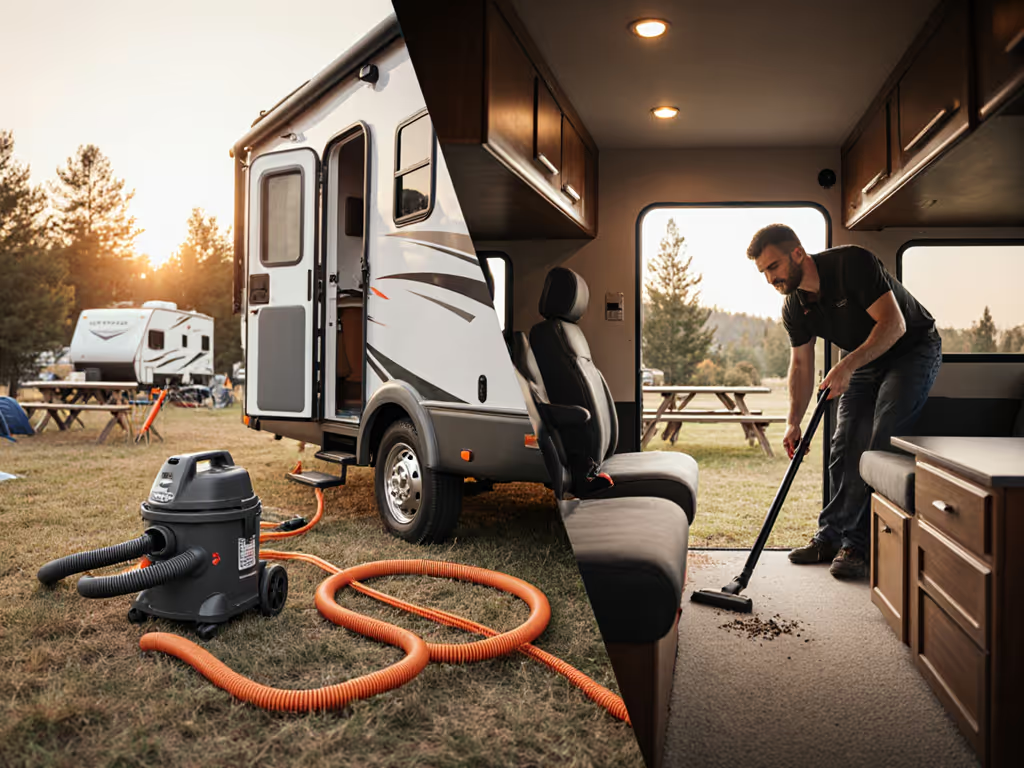
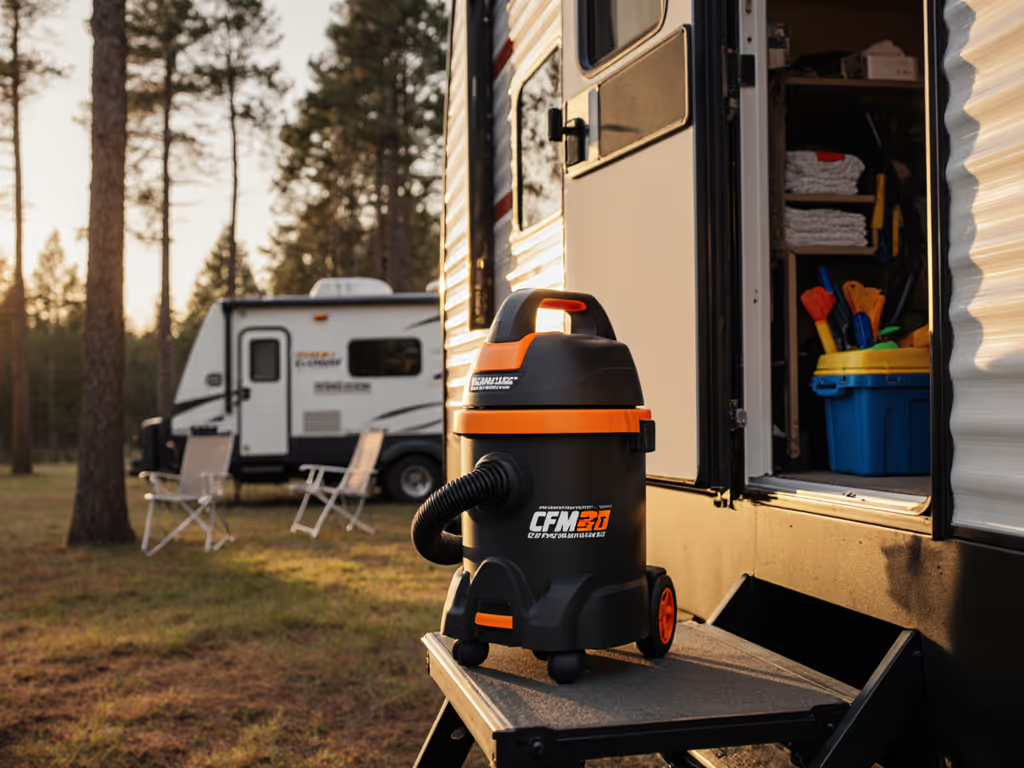
When you're working out of a van, trailer, or mobile workshop, your RV shop vac comparison hinges on one hard truth: your vacuum has to earn its footprint. A bulky, tipping-prone unit that eats battery life mid-job doesn't just waste time, it kills momentum and ruins reputation. Similarly, dragging a corded workshop vacuum through a confined RV kitchen or across a client's freshly stained deck creates its own headaches. The choice between corded and cordless isn't about specs alone; it's about which setup keeps your workflow smooth, your space uncluttered, and your rig stable when it matters most.
I've spent years watching professionals on job sites and inside vehicles learn this lesson the hard way. The goal here is to help you skip that curve and pick the right vacuum before it ships.
1. Unlimited Runtime vs. Battery Autonomy: Where Each Shines
Corded vacuums deliver consistent power as long as you have an outlet. No runtime anxiety. For contractors tackling a full-day drywall demo or remediation crew managing hours of wet cleanup, this matters enormously. You won't watch suction fade mid-filter as battery charge drops. For lab data on runtime and pull under load, see our corded vs cordless shop vac test. You simply plug in and work.
Cordless models trade that infinite runtime for freedom. Depending on the model, you're looking at 15 to 90 minutes per charge. For an RV operator or mobile detailer hitting quick messes in quick succession, like spilled sawdust, tracked mud, and car interiors, you often don't need an hour of continuous suction. Cordless shines in apartments, small vans, and spot-cleaning workflows.
The real question for RV life: Are you cleaning one large mess per day, or multiple smaller jobs? Prep beats cleanup, and that means knowing your job flow before you power on.
2. Suction Power and Consistency: Corded Typically Wins on Deep Clean
Corded vacuums maintain stronger, more consistent suction across the whole job. Their motors draw direct power, so you get steady pull without battery voltage sag. A corded upright can haul embedded pet hair and fine drywall dust out of deep pile carpet that a cordless might only half-extract.
Cordless models have improved dramatically. High-end cordless vacuums can deliver excellent suction for daily tasks and lighter duty. However, if you're dealing with thick carpet, stubborn concrete residue, or high-volume fine dust (silica, drywall, soot), a corded unit remains the safer, more reliable bet. The difference is tangible on your second filter: a weaker vac clogs faster because suction declines sooner.
3. Mobility and Maneuverability: Cordless Wins - If Your Job Size Allows It
Cord length is a genuine constraint. Even a 50-foot extension creates snag points on stairs, around furniture, and in tight RV bathrooms. Cordless eliminates that tether. You move freely, pivot without tangles, and clean above-floor surfaces (upholstery, high shelves, vehicle ceilings) without wrapping cable around light fixtures.
For a solo contractor or detailer working in vans and small spaces, that freedom is worth its weight. For a team managing a larger demo or a water loss in a home, the cord becomes a minor annoyance compared to the reliability and power.
But here's the catch most people miss: a cordless vac sitting on a van floor with a low battery is less mobile than a corded one with full outlet access. Prep beats cleanup, so charge your batteries the night before, or keep a second set.
4. Weight, Footprint, and Tip-Over Risk: Cordless Lightness vs. Corded Stability
Cordless vacuums are substantially lighter and more compact. This is a genuine win for RV storage and vehicle mounting. For space-constrained rigs, start with our RV compact vacuum guide. Cramped quarters demand gear that doesn't demand a dedicated corner.
However, and I say this from a decade of job-site experience: a lightweight, tall-profile cordless unit wobbles. On uneven garage floors, unpaved job sites, or inside a rocking travel trailer, a tall, narrow corded canister (especially with a low center of gravity) stays upright when the cordless tips and scatters dust everywhere. I once watched a tall cordless hit a hose during a client walk-through and spill drywall debris across fresh cabinetry. Switched to a low, stable canister model, shortened the hose, and secured the whole rig to the van. That trailer never moved again, and the client never noticed the vac at all.
A vac that stays upright keeps your reputation upright.
5. Cost: Upfront vs. Long-Term Value
Corded vacuums cost less to buy. Many powerful options sit in the $200-500 range, making them entry-friendly for budget-conscious DIYers and small crews. No battery to replace, fewer moving parts, and lower maintenance costs over time.
Cordless vacuums carry higher upfront tags, often $600-1,200+, because of battery tech and compact engineering. However, if you use it for quick daily cleanups and light work, the per-use cost eventually balances out. For contractors running jobs 8+ hours a day, cordless runtime limitations usually force you to buy two batteries and a charger, inflating total cost.
The long-term picture: Corded vacs eliminate battery replacement expenses (typically $100-400 after a few years) and tend to need less repair. Cordless vacs save you on energy costs and maintenance intervals, at least until the battery degrades.
6. Filter Type and Clog Prevention: Task-Specific Setup Matters
Both corded and cordless models offer HEPA filters, standard cartridge filters, foam sleeves, and bags, but matching the right filter to your mess is where workflow stays smooth or breaks.
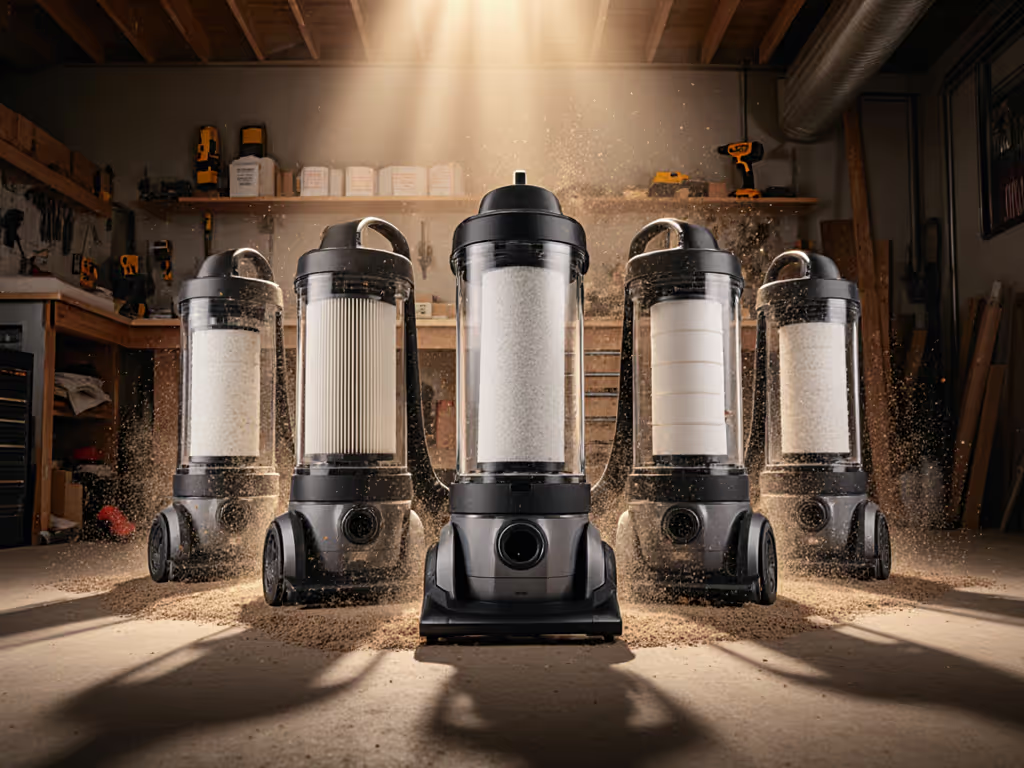
Drywall dust clogs standard filters fast. Fine dust work (concrete, sanding, plaster) demands a fleece bag or sealed cartridge. Wet pickups require a foam sleeve and a drain port, never a paper filter. Not sure which media fits your mess? Compare foam, paper, and HEPA filters. If you're doing mixed jobs in a van, like a morning of dry sanding and an afternoon of water mitigation, you need either a vac with quick-change filter cartridges or enough space to carry a second unit.
Corded and cordless both offer this flexibility; the advantage goes to whichever model you'll actually maintain on site. Smaller cordless units sometimes have filters too cramped to clean without mess. Larger corded canisters are easier to work with in tight spaces if you've prepped your teardown routine.
7. Hose Length, Diameter, and Suction Loss: RV-Specific Gotchas
In a van or travel trailer, a long hose kills suction. Every foot of hose, especially narrow ones, creates resistance. See how hose length and diameter affect suction. A 25-foot hose curled in a van closet is dead weight if your workspace is 10 feet away.
Cordless vacs often come with shorter stock hoses (20-25 feet). Corded models ship with longer hoses (40-50 feet), which is great for large shops but wasteful in a compact RV. Solution: buy a shorter hose for your RV setup. Reduce the adapter chain, lock connections tight, and verify diameter matches your power tools' ports (common sizes: 1.25 inches, 1.875 inches, 2.5 inches, or metric 27 mm and 36 mm).
Most RV pros I've worked with shorten the hose from 50 feet to 30, add a locking quick-connect at the vac intake, and strap everything to a wall bracket. Prep beats cleanup: measure your working radius, then buy exactly what you need.
8. Noise Levels: Cordless Quieter for Occupied Spaces
Cordless vacuums are measurably quieter than corded models. If you're detailing cars in a residential area, cleaning occupied homes during remodel, or working inside a school or healthcare facility, cordless noise compliance is a real advantage. Corded shop vacs can hit 80+ decibels; many cordless units sit around 70-75 dB. If noise is a top concern, check our quiet shop vac comparison.
For RV work, noise matters if you're parked at a client's property or in a community lot. A quiet vac is professional; a loud one signals carelessness.
9. Multi-Surface Capability: Both Handle Wet and Dry - If Set Up Right
Corded and cordless vacuums can both handle wet and dry jobs, but setup is critical. Wet pickup with a paper filter = ruined filter, motor damage, and odor. Switch to a foam sleeve or dedicated wet-filter cartridge, ensure your drain port is open (never sealed), and empty the tank within minutes of wet work.
Cordless units often have smaller tanks, which means frequent emptying on wet jobs. Corded canisters hold 5-10 gallons, reducing dump-and-return cycles. For RV-based remediation or restoration work, that efficiency saves travel time to outdoor disposal and water rinse stations.
10. Real-World Setup for RV and Mobile Work: Actionable Checklist
Here's how to think through your choice:
Choose Cordless If:
- Your jobs are primarily 15-45 minutes of continuous vac work
- You're doing daily spot cleanups and quick messes in multiple locations
- Your RV storage is tight and weight matters
- You're cleaning occupied homes or noise-sensitive spaces
- You're comfortable managing two batteries and keeping one on charge
- Your work is mostly dry (dust, pet hair, general debris)
Choose Corded If:
- Your jobs exceed 1-2 hours of continuous suction
- You're tackling deep-pile carpet, embedded soot, or fine dust
- You're doing mixed wet/dry work and want a large tank to reduce emptying
- Your RV has reliable outlet access (shore power, generator, truck cab)
- You need strong, consistent suction without voltage sag
- You're prioritizing lower upfront cost and longer tool lifespan
- You're working on commercial or contractor timelines
RV Pre-Flight Setup (Both Types):
- Measure your working radius inside your van or trailer; buy hose length accordingly
- Verify your power tool ports (bring calipers) and match hose diameter; buy adapters before delivery
- Pre-stage your filter type: fleece bag for drywall, foam sleeve for wet, cartridge for mixed
- Mount the vac to a wall bracket or secure it with straps: a tipping vac mid-drive is a liability
- Assign one corner of your RV for filter storage, hose coils, and connector quick-connects
- Label your hose and adapters so you don't grab the wrong setup on-site
- For cordless, charge both batteries overnight and bring a car charger or solar trickle charger
- Test your vac at low speed before a client job; suction fade signals a clogged filter
Your Next Step: Measure, Verify, Then Buy
Before adding an RV shop vac or best compact vacuum to your cart, grab a tape measure, check your outlet access (120V standard or do you have 240V?), and measure the distance from your primary working zones to your plug or battery-powered unit. Plug those numbers into your decision.
If you're working longer than 90 minutes continuously or dealing with stubborn, deep dust, a corded vac with a stable, low profile is your baseline. If your work is modular and quick, and your RV storage is precious, cordless edges ahead, but only if you have two batteries and a reliable charging plan.
Then, before you buy, verify hose diameter and adapter fit. Request fitment documentation or photos from the seller; don't guess. A mismatched port costs you air leaks, lost suction, and frustration you don't need.
Say it to yourself: Prep beats cleanup. Get the right vacuum and the right setup the first time, and your RV will stay clean, your reputation stays intact, and your next job starts on time.
Related Articles