
Prevent Static Damage: ESD-Safe Shop Vac Guide for Electronics Repair
By Diego Santana • 29th Oct
That spark you feel when touching a circuit board isn't just annoying, it's a death sentence for sensitive components. A standard shop vac can generate 15,000 volts of static during operation, silently frying MOSFETs and ICs before you even notice. But here's the truth most suppliers won't tell you: ESD-safe shop vacs and properly configured electronics repair vacuum setups aren't niche luxuries. They're non-negotiables for anyone handling PCBs, SMDs, or microcontrollers. I learned this when a client's $2,000 prototype failed after "routine cleaning." The culprit? A regular vacuum's ungrounded hose path. Fitment drives performance; plan interfaces before buying boxes. For a broader overview of electrical and chemical hazards with wet/dry vacs, see our shop vacuum safety guide.
Why Standard Vacuums Fail in Electronics Workshops
Most shop vacs are triboelectric nightmares. As dust particles collide inside non-conductive hoses, they generate static via the triboelectric effect, a documented cause of 32% of unexplained electronics failures (per IPC ESD Handbook). Typical pain points:
- Non-conductive hoses (PVC/rubber) acting as capacitor sleeves, storing charge until sudden discharge
- Missing ground paths between tool ports, hoses, and motor housings
- Plastic filters generating static during airflow (common in HEPA "upgrades")
- Incompatible port sizes forcing leaky adapter chains that disrupt grounding continuity
Measure ports, map adapters, then nothing surprises on-site.
I once inherited a drawer full of adapters that looked compatible with my anti-static tools, until I checked the anti-static path with a megohmmeter. The rubber gaskets were insulating critical connections. Game over.
Step 1: Verify Your Vacuum's ESD Protection Path (The Critical 3-Point Check)
Forget marketing claims. Physically validate these elements before connecting to your workstation:
-
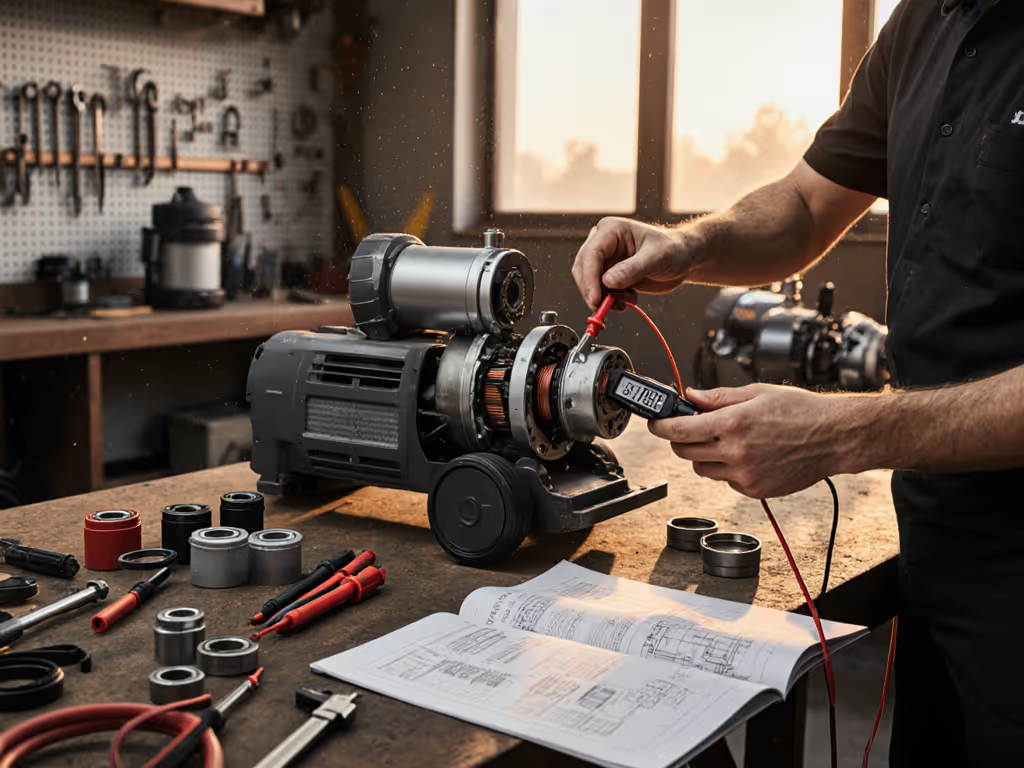
Hose Conductivity Test Use a multimeter set to resistance mode. Place probes 12" apart on the hose interior. Acceptable range: 10^4-10^9 ohms/meter. Anything higher (e.g., standard PVC's 10^12+ ohms) won't dissipate charge. Pro tip: Look for hoses with carbon-fiber strands woven into the wall (3M's 09925 is a common benchmark).
-
Grounding Continuity Check Probe from the metal tool port to the vacuum's grounding pin on the plug. Max resistance: 1.0 ohm. Any break here (common with plastic reducers) kills the anti-static path. I've seen $500 Festool adapters fail this test due to ceramic-coated joints.
-
Filter Static Test Run a charged polystyrene ball past the filter intake. If it's attracted to the filter media, it's generating static. Only use conductive filters like Atrix's H12 Ultrafine series with carbon-loaded pleats.
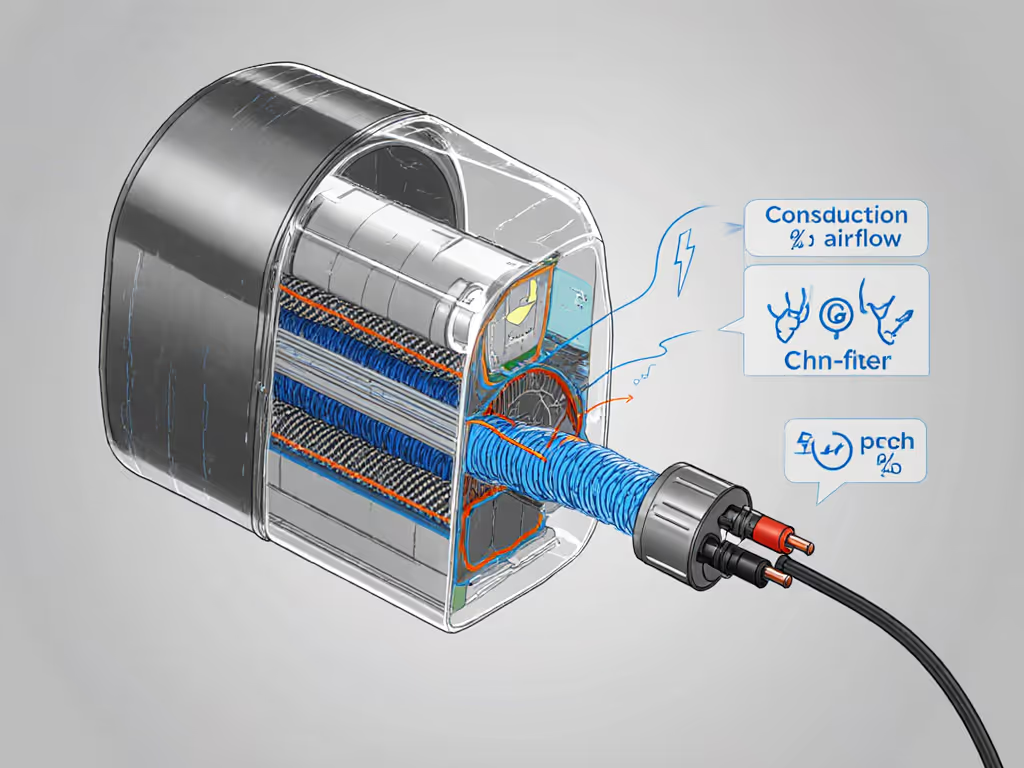
Step 2: Standardize Ports for Electronics Tools (No More Guesswork)
Your DeWalt soldering station's 27 mm port won't mate cleanly with a Milwaukee 32 mm anti-static tip. Forced adapters create air gaps that disrupt grounding. Here's the fitment map powering my shop:
| Tool Port Size | ESD Adapter Needed | Critical Tolerance | Example Tools |
|---|---|---|---|
| 27 mm ±0.2 mm | 27 mm male → 32 mm female ESD reducer | Must maintain <0.5 mm gap | Hakko FX-951, JBC CD-2BSE |
| 32 mm ±0.3 mm | 32 mm ESD straight coupler | Requires conductive O-ring | Pace FX956, Metcal MX-500 |
| 36 mm (1-7/16") | 36 mm → 1-7/8" ESD reducer | Verify brass sleeve contact | Atrix ATIHCTV5 vacuums |
Never use plastic adapters between ESD tools and vacuums. That Vacmaster Beast Series unit popular with mobile techs? Its 1-7/8" port (47.6 mm) needs a verified 36 mm to 1-7/8" ESD reducer like Northern Industrial's NR-ESD36 (part # NR-ESD36-RED). I keep mine labeled with anti-static path schematics right on the adapter.
Step 3: Build Your ESD-Proof Hose System
A single weak link ruins the chain. Here's the spec sheet I use for circuit board cleaning vacuum setups:
- Hose diameter: 32 mm (1-1/4") for optimal CFM on fine dust, smaller diameters increase velocity (and static risk)
- Length: Max 7 ft (2.1 m). Longer hoses = higher resistance (per ANSI/ESD S20.20)
- Conductive path: Continuous carbon layer from tool tip to motor housing
- Static-dissipative nozzle: Metal sleeve with <10^6 ohm resistance (e.g., Vacmaster's ESD-ready crevice tool)
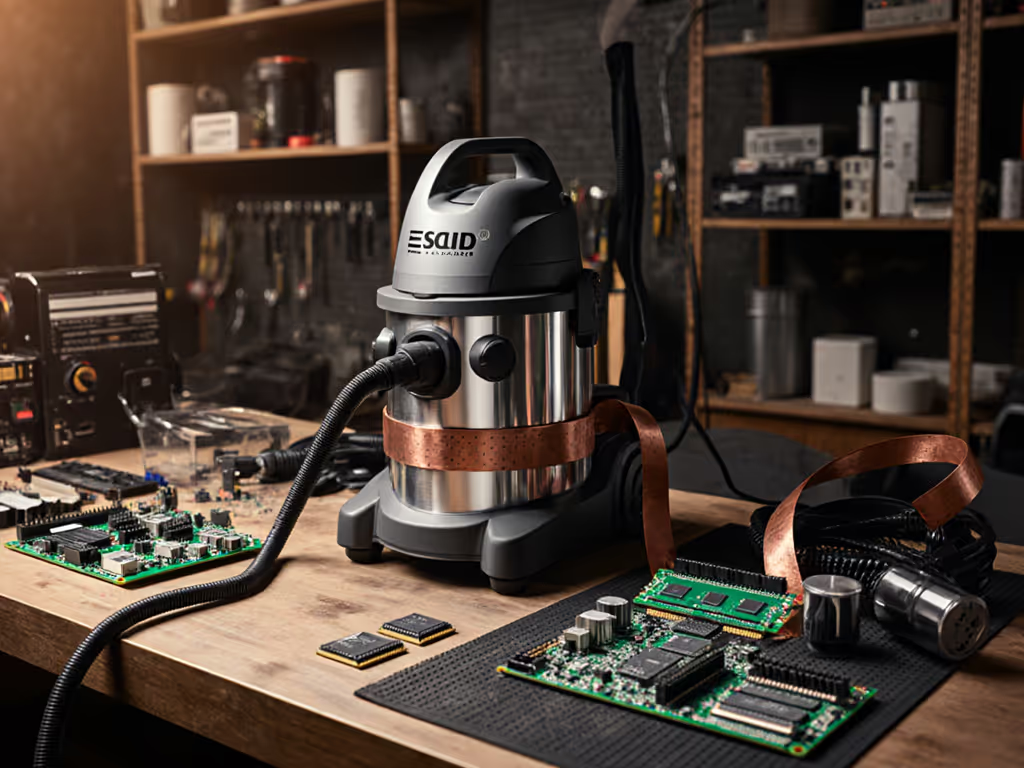
Replace foam sleeves with conductive gaskets at every junction. Standard foam insulates, exactly what you don't want. I run a 0.022" copper strip between reducer joints, secured with conductive adhesive. It's visible in my fitment library photos (#Adapter12 in my collection).
Step 4: Filter Selection That Won't Generate Static
HEPA filters aren't ESD-safe by default. That polypropylene media? A static generator. Demand:
- Conductive frame: Aluminum or carbon-loaded plastic
- Grounded media: Pleats stitched with stainless steel thread
- No foam pre-filters: Use cyclonic pre-separators instead (e.g., Dust Deputy for 5-gal units)
Stores push "cool vacuum cleaner" aesthetics over function. Don't be fooled. True ESD protection vacuum systems use filters like the Atrix ATIHCTV5's H12 cartridge, tested to dissipate 5,000V in <0.1 seconds per IEC 61340-5-1.
The Real Cost of Skipping ESD Verification
A contractor friend skipped these checks to save time. His "quick clean" of a drone circuit board caused latent ESD failure. Repair cost: $8,200 in client credits. Meanwhile, my shop's standardized ESD vacuum system (with labeled adapters hung on a magnetic board) has zero static incidents across 12,000+ repair hours. Cleanup time dropped 40% because we're not troubleshooting phantom failures.
Your Action Plan: Sketch the System Before Buying
- Map your tool ports with calipers (record sizes to ±0.1 mm)
- Verify every component's resistance don't trust product descriptions
- Prioritize grounding continuity over CFM specs for electronics work
- Label adapters with max resistance values (e.g., "NR-ESD36: 0.8Ω")
Static discharge prevention isn't about expensive gear, it's about predictable interfaces. I mix Vacmaster bodies with Atrix filters and Northern Industrial adapters because the system works. No irreversible mods. No counterfeit parts. Just calibrated paths from nozzle to ground.
Measure ports, map adapters, then nothing surprises on-site.
The next time you fire up a vacuum near circuits, ask: "Where's the charge going?" If you can't trace that path in under 10 seconds, you're gambling with components. For deep dives into ESD materials testing, I recommend Techspray's free guide, real data beats marketing fluff every time. Now go sketch your system.
Related Articles