Winterproof Your Shop Vac: Avoid Frozen Hoses
By Aisha El-Sayed • 13th Oct
Introduction: Keeping Your Shop Vacuum Ready for Cold Weather Vacuuming
As temperatures dip below freezing, your shop vac faces unique challenges that can turn simple cleanup into a major headache. When moisture-laden air from your shop vacuum meets cold surfaces, you're not just dealing with reduced performance, you're risking equipment damage and safety hazards. Cold weather vacuuming requires specific preparation to maintain both suction power and operational safety. I've seen too many crews dismiss winter prep until they're wrestling with a frozen hose mid-job, or worse, facing condensation issues that compromise their dust containment. Let's map your shop vac's requirements to winter realities with clear, actionable steps anyone can follow. Remember: Containment protects people and businesses; compliance is good operations.
FAQ Deep Dive: Winterizing Your Shop Vac
Why does cold weather affect my shop vac's performance?
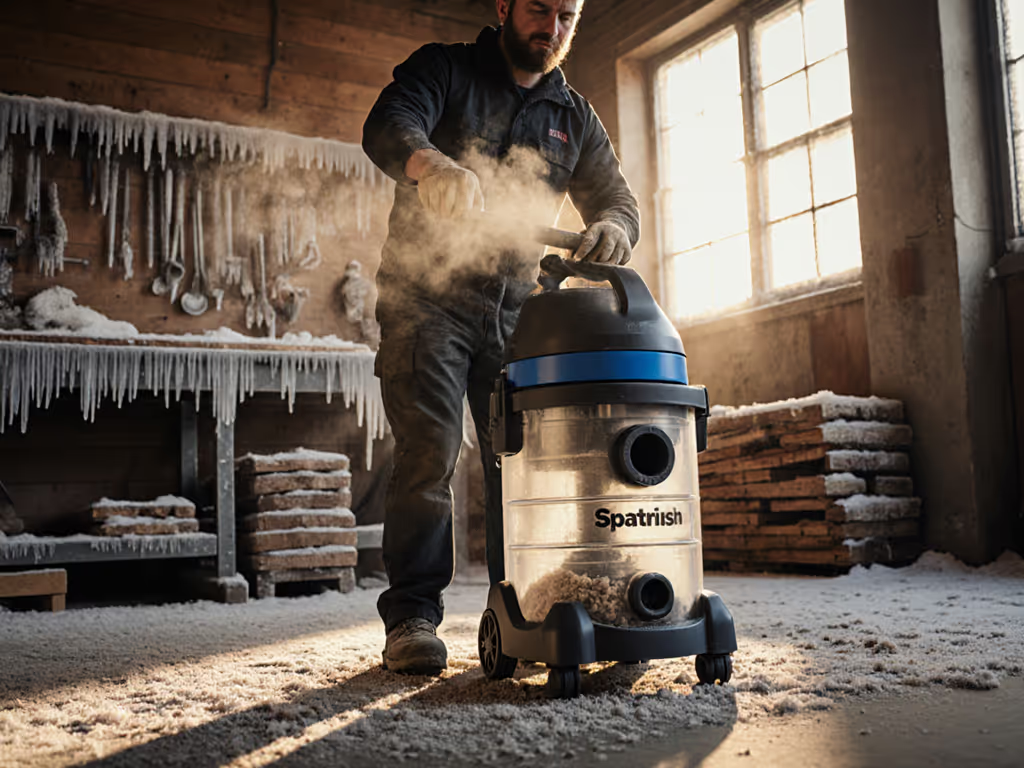
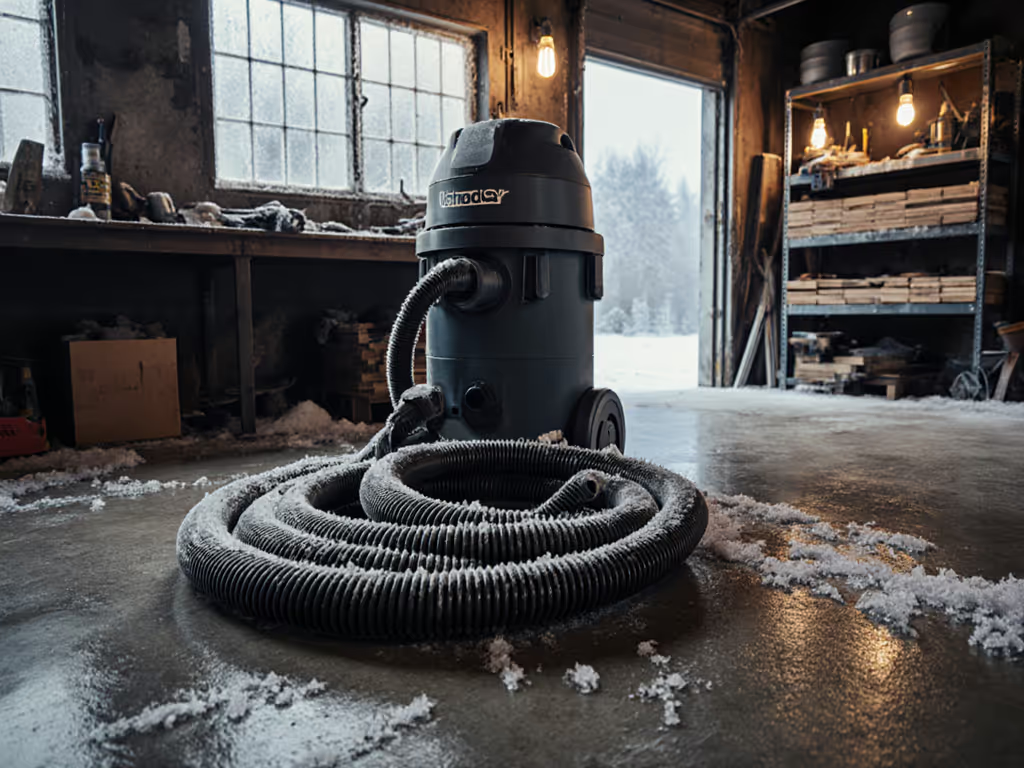
The physics are straightforward but often overlooked. When warm, moisture-laden air from cleanup work passes through your vacuum hose into a cold environment, condensation forms inside the hose and tank. In freezing conditions, this moisture turns to ice, creating blockages that:
- Reduce suction power by up to 70% (confirmed by industry testing)
- Cause motor strain from restricted airflow
- Create unsafe pressure buildups
- Risk permanent damage to seals and joints
Risk category alert: Shop vac in freezing temperatures without proper preparation falls into 'high-risk operational failure' (the same category as operating without proper HEPA filtration for silica work). Both scenarios lead to equipment damage and worker exposure risks. For a broader checklist on hazards beyond winter conditions, review our shop vac safety guide.
What's the most common winter mistake tradespeople make?
Storing wet equipment without proper drying. I've witnessed crews shut down for the day with damp hoses coiled and tanks half-full, only to return to frozen equipment. This creates three critical failures:
- Ice blockages that halt operations
- Cracked tanks from expanding ice
- Mold growth from trapped moisture
Seal every joint on purpose (this applies to winter prep as much as it does to HEPA filtration). One unsealed connection becomes the weak point where moisture enters and freezes.
How do I properly prepare my shop vac for cold weather vacuuming?
Execute this pre-winter shutdown checklist before temperatures consistently hit freezing:
- Complete drain protocol: Remove all liquids and allow thorough drying (minimum 24 hours in a climate-controlled space)
- Disassemble critical components: Remove hose, wand, and internal filters for individual drying
- Non-destructive moisture check: Run a dry cloth through the entire hose path; any dampness requires additional drying time
- Storage verification: Ensure equipment is stored in a location maintaining temperatures above freezing For step-by-step upkeep that preserves suction through winter, see our filter cleaning and maintenance guide.
This mirrors the discipline required for OSHA silica compliance (meticulous attention to detail prevents costly failures). Remember the masonry crew that got cited after dry cutting? Similar principle: skipping preparation steps invites avoidable consequences.
What about preventing vacuum hose freezing during active winter workshop cleaning?
When you must operate in cold conditions, implement these real-time countermeasures:
- Pre-warm technique: Store hoses in a heated area until immediate use
- Strategic positioning: Keep hose runs as short as possible and avoid contact with cold surfaces
- Post-use purge protocol: Run the vac empty for 2 minutes after wet pickup to clear residual moisture
- Anti-freeze alternatives: For extreme cold, consider food-grade propylene glycol (1-2 oz) in water pickup (never automotive antifreeze)
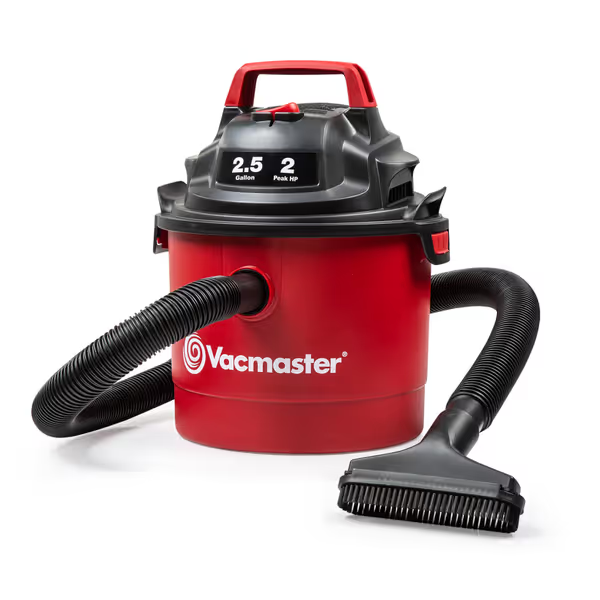
Vacmaster 2.5-Gallon Wall Mountable Wet/Dry Vacuum – VOM205P
Compact, powerful, wall-mountable wet/dry vac for quick cleanups.
$44.99
Air Watts100 AW
Air Watts100 AW
Pros
Wall-mountable design saves floor space & prevents tipping.
Lightweight (6 lbs) & portable for on-the-go messes.
Includes 6 accessories & converts to blower for versatility.
Cons
2.5-gallon capacity may require frequent emptying for larger jobs.
Customers find this wet/dry vacuum powerful and effective, particularly noting its performance on stairs and small messes. The vacuum is praised for its compact size, being perfect for small jobs, and its lightweight design makes it easy to handle and move around. Customers appreciate its dirt pickup capabilities, mentioning it's great for litter box area clean-up and removing embedded dirt, while also considering it good value for the price.
Customers find this wet/dry vacuum powerful and effective, particularly noting its performance on stairs and small messes. The vacuum is praised for its compact size, being perfect for small jobs, and its lightweight design makes it easy to handle and move around. Customers appreciate its dirt pickup capabilities, mentioning it's great for litter box area clean-up and removing embedded dirt, while also considering it good value for the price.
How do I address shop vacuum condensation issues between seasons?
Seasonal transitions create unique moisture challenges even when temperatures aren't freezing. Implement this condensation management routine:
- Temperature acclimation: Allow equipment to adjust to ambient workshop temperature for 30+ minutes before use
- Dual-filter verification: Use both foam sleeve and cartridge filters during seasonal transitions
- Quick-connect inspection: Check all joints for moisture accumulation after each use
- Desiccant deployment: Place silica gel packs in storage containers for vacuum accessories
These practices directly support your containment objectives; they are not just about equipment longevity, but about maintaining clean air protocols year-round. Condensation management is the insurance your lungs deserve.
Critical Winter Workshop Cleaning Practices
Your Cold Weather Vacuuming Pre-Flight Checklist
Before firing up your shop vac in cold conditions, verify these pass/fail criteria:
✅ Dry test: No moisture present in tank, hose, or connections (fail = delay operation until dry)
✅ Flex verification: Hose remains pliable when gently bent (fail = store in warmer environment); see our hose material comparison for cold-rated options.
✅ Seal integrity: All connections maintain tight seals without gaps (fail = replace worn gaskets)
✅ Drain confirmation: Tank drain valve operates freely (critical for emergency water release)
This checklist-driven approach prevents the common scenario where crews start work only to discover frozen equipment halfway through a job. Winter workshop cleaning demands the same preparation discipline as high-risk dust containment (you wouldn't start drywall sanding without confirming your HEPA setup, and you shouldn't begin cold-weather vacuuming without verifying your winter readiness).
What about battery-powered vacs in cold temperatures?
Lithium-ion batteries lose up to 50% capacity below freezing. Protect your investment with these winter battery protocols:
- Store batteries indoors overnight
- Keep spare batteries warm in an insulated pouch
- Limit runtime to 50% of normal before recharging
- Never charge below 32°F (0°C)
- Verify battery temperature before installation If winter runtime is a concern, compare cordless vs corded shop vacs to pick the right setup for cold-weather work.
Final Thought: Your Winter Readiness Equals Operational Continuity
Cold weather vacuuming doesn't have to mean downtime and equipment damage. By treating winter preparation with the same seriousness as your HEPA filtration protocols, you protect both your equipment and your crew's health. Remember: Containment first; cleanup is the insurance your lungs deserve.
Having battled frozen equipment and condensation issues on multiple job sites, I've learned that the crews who maintain consistent operations through winter follow one simple principle: Seal every joint on purpose (whether it's a hose connection or your seasonal preparation routine).
For further exploration of seasonal equipment maintenance protocols, request our free site-ready winter checklist that maps OSHA requirements to practical cold-weather workflows your crew can implement immediately.
Related Articles