Dust Collector Cyclones: Shop Vac Comparison
By Aisha El-Sayed • 23rd Mar
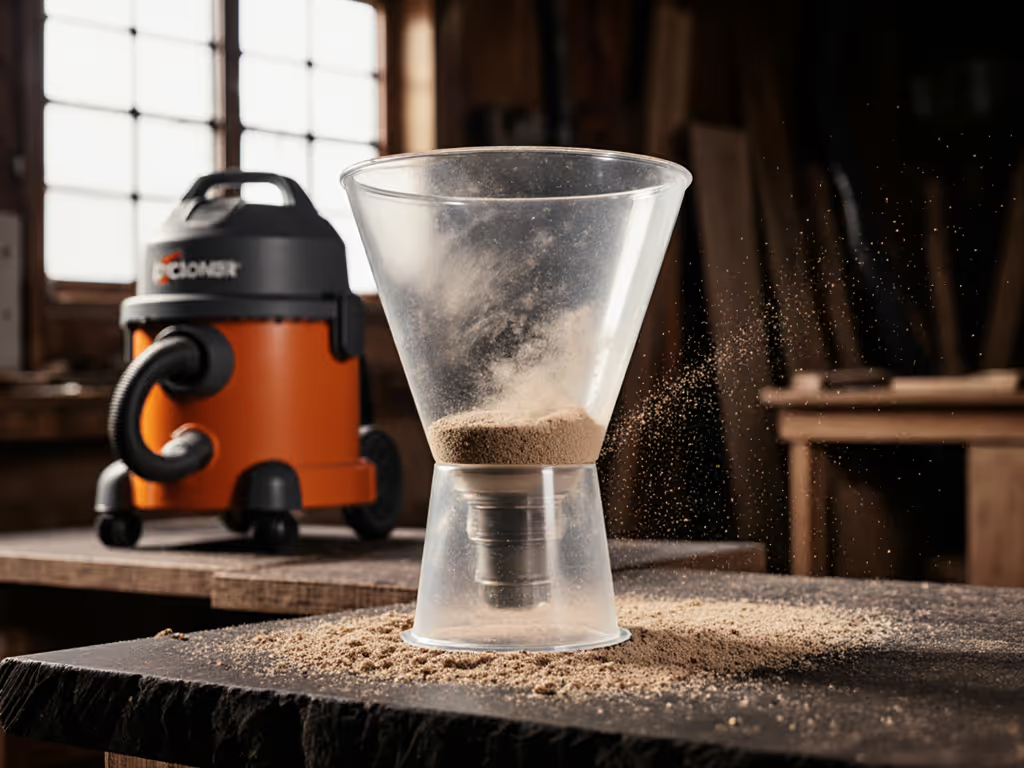
If you're running a job site or workshop where dust collector cyclones are supposed to keep your tools running and your filter clean, you need to know which system actually delivers. For a deeper dive into how cyclone separators work and why they protect filters and motors, see our cyclone technology guide. A shop vacuum dust collection system isn't just one purchase; it's a chain of connected decisions about flow, filtration, separation, and how fine particles get trapped before they wreck your motor and health. This guide maps the most common cyclones against real-world performance data so you can make a choice that actually survives a surprise compliance visit.
Why Cyclones Matter More Than You Think
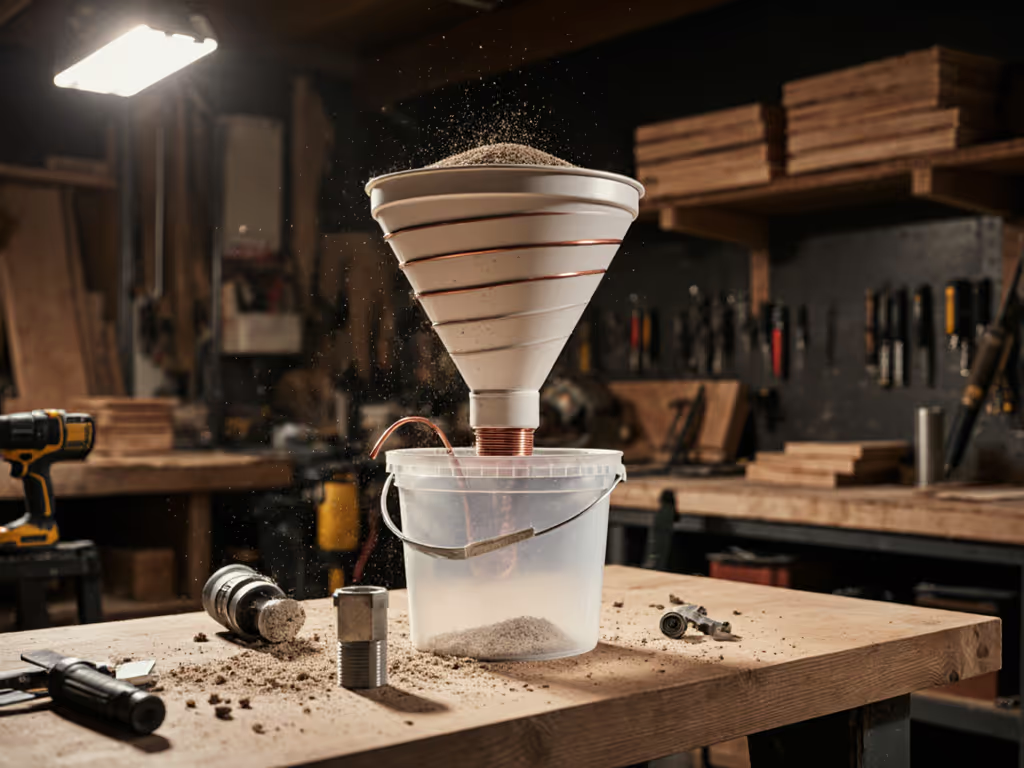
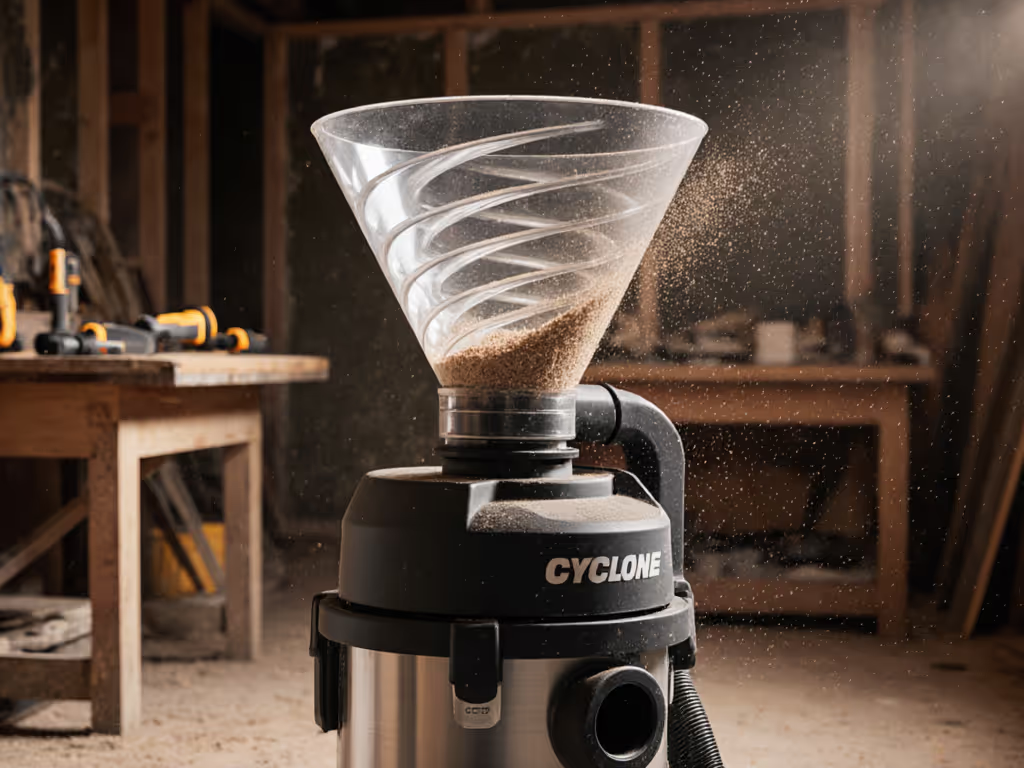
A standard shop vac pulls air and dust directly into a paper or fabric filter. Fine particles, the stuff from sanding, drywall, concrete, clog that filter fast, killing suction and eating up your maintenance time. A cyclone separator changes the game by spinning dust out of the airstream before it reaches the filter. Two-stage collection means chips and dust drop into a waste bin while cleaner air moves on.
I learned this lesson the hard way. A masonry crew on one of my sites was dry-cutting concrete without a proper separator. The dust cloud alone triggered a citation, but the real problem was their vac lacked certified filtration to handle fine silica particles. If you work with concrete or masonry, review our OSHA-compliant silica dust vacuum setup. We paid for the violation, swapped their setup for a sealed system with a cyclone, and haven't had a surprise visit become an incident since. That's when I realized: containment first; cleanup is the insurance your lungs deserve.

Step 1: Understand the Core Cyclone Types and Their Efficiency
Not all cyclones separate dust equally. When testing popular models, independent lab results show dramatic differences in how much fine dust bypasses the cyclone and loads your filter.
Dust Deputy separates fine particles (corn starch dust in testing) at approximately 95% efficiency. It handles planer chips and longer slivers without jamming, and it maintains strong performance across both high-CFM and low-CFM shop vacs.
Dustopper separates coarser dust well but passes significantly more fine particles than the Dust Deputy, roughly 2.5x to 7x more fine dust depending on vac power and bin fullness. The trade-off: it's simpler and slightly more affordable.
Critical insight: Cyclone efficiency compounds. If one cyclone is 98% efficient and another is 99%, the 99% model passes half the particles to your filter, meaning you clean your filter twice as often with the less efficient unit. Over a season of heavy sanding or drywall work, that difference turns into dozens of filter cleanings versus a handful.
Performance varies by dust type. Coarse dust (table saw, planer) sees small differences between cyclones. Fine dust (from sanders, concrete cutting, drywall finishing) shows massive gaps, the Dust Deputy is 4x to 10x more efficient. See our data-backed cyclone separator comparison to choose the right model for your dust profile.
Step 2: Assess Your Tool Mix and Dust Profile
Before you order, inventory what you cut, sand, or grind:
- Coarse chips and shavings (planing, ripping, table saw): Most cyclones handle this well. Confirm the cyclone's slot or port won't jam on long slivers. The Dust Deputy handles planer chips without clogging; the Dustopper can jam.
- Fine dust (sanding, drywall finishing, concrete cutting): This is where cyclone choice matters most. Fine-dust efficiency separates a system that stays clean from one that needs a filter clean every two jobs.
- Wet pickup (water-damaged materials, mud, ashfall): Requires a drain port and sealed collection. Standard dry cyclones aren't designed for this; you'll need a wet-vac setup.
- Silica-bearing work (concrete, masonry, tile): Compliance escalates. You need sealed joints, verified HEPA filtration, and documentation. A cyclone alone isn't enough; it's part of a sealed system.
Fill in your checklist:
- Primary material: _____
- Secondary material: _____
- Frequency per week: _____
- Compliance requirement (OSHA silica, general workshop): _____
Step 3: Match Cyclone Efficiency to Your Vac Power
Cyclones create friction. When you connect one, flow rate drops significantly. A high-CFM shop vac paired with an inefficient cyclone can slow down worse than a lower-CFM vac with a top-tier cyclone.
The math is real: Tested with a 6 HP Ridgid vac (higher CFM), the Dust Sheriff cyclone delivered 32% more airflow than the Dustopper and 28% more than the Dust Deputy. Paired with a lower-CFM Vacmaster unit, efficiency gaps widen even more.
Practical rule: If you're running fine dust work (sanding, drywall), a higher-efficiency cyclone (Dust Deputy tier) means:
- Your filter stays cleaner longer, potentially 10x longer in fine-dust scenarios.
- You spend less time on maintenance and more time on projects.
- Your suction stays stronger over a full job.
If you're mostly moving coarse chips, a mid-range cyclone paired with adequate CFM gets the job done without overspending.
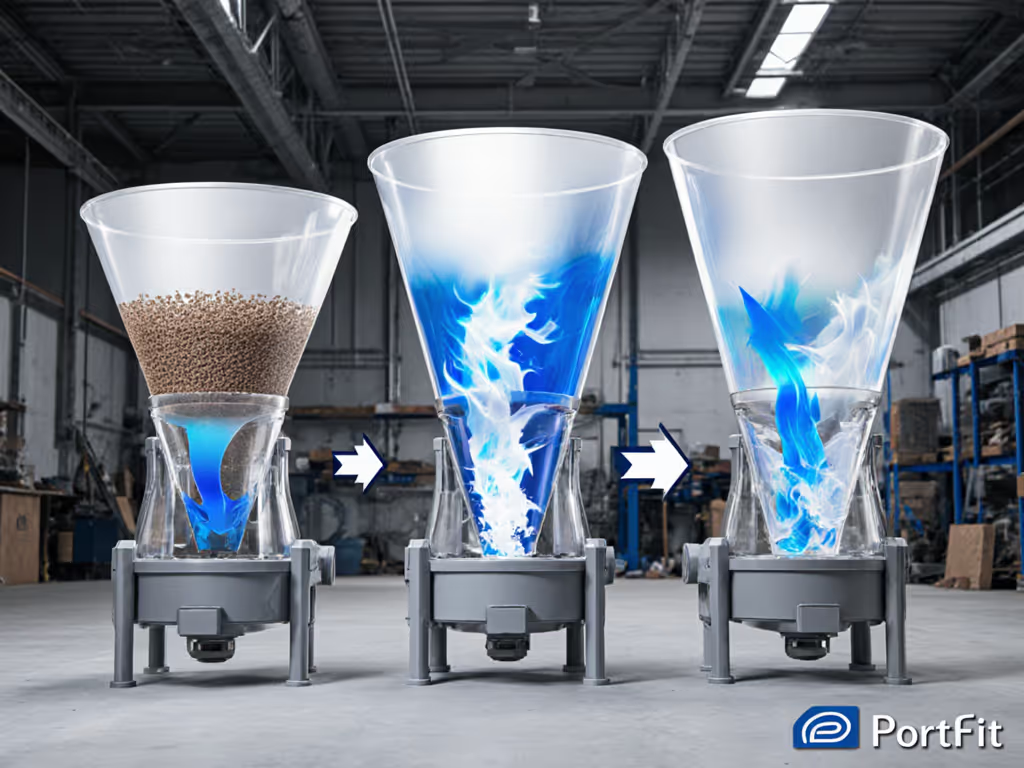
Step 4: Build Your Kit with Sealed Joints and Compliance in Mind
Here's where directive practice beats theory. A cyclone sitting loose on your vac isn't a system; it's a dust leak waiting to happen. Seal every joint on purpose.
Your pre-purchase checklist:
- Vac unit: Confirm CFM rating (not "peak HP"). Look for sealed suction specs if you're handling fine dust. To understand why airflow matters more than peak HP, read our CFM vs peak HP explainer.
- Cyclone separator: Match efficiency to your dust profile (fine-dust work → higher efficiency).
- Collection bin: Ensure it seats securely to the cyclone and has a drain plug if wet pickup is possible.
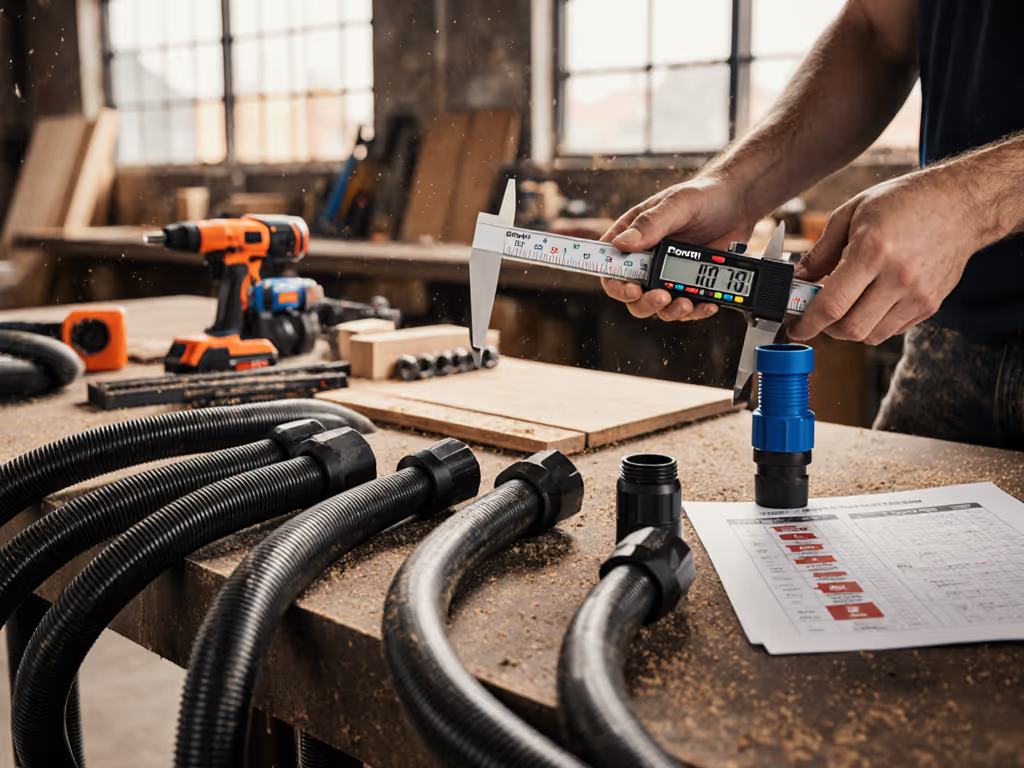
- Hose and adapter kit: All connections must be airtight. Loose adapters bleed suction and spread dust. Verify diameter compatibility (common sizes are 1.25", 1.875", and 2.25"). For tool ports and adapters, bookmark our hose compatibility guide.
- Filter: If you're handling silica or fine dust, plan for HEPA-rated replacement filters. Don't assume the vac ships with the right one.
- Labels and routine: Mark your filter change interval and cyclone bin capacity. Post it on the vac. Crews under pressure skip maintenance; labels prevent that.
That labeled kit I built for our site became non-negotiable. HEPA bag, certified filter, taped joints, and a shroud for point-source cutting. No guessing. No citations since.
Step 5: Evaluate Cyclone Performance Under Your Actual Conditions
Lab data is helpful, but your specific setup matters. Consider these factors:
Bin fullness: Some cyclones are sensitive to bin capacity. With the Dustopper, a three-quarter-full bin shows performance drops with lower-CFM vacs, especially on fine dust. The Dust Deputy performs consistently full or empty.
Cyclone sensitivity to flow: If you run long hoses or multiple pickup points, your effective CFM drops. A lower-sensitivity cyclone (Dust Deputy) maintains efficiency; a high-sensitivity model (Dustopper) shows larger performance hits.
Your vac motor: Cyclones add restriction. Pair them with equipment rated for the pressure drop. Check the cyclone's specs for minimum CFM requirements.
Step 6: Document Your Setup for Compliance and Scaling
If you're the only operator, photos and notes help. If you're running a crew, documentation is non-negotiable, especially for silica work or jobs in schools and healthcare facilities.
Required documentation:
- Vac make, model, CFM, sealed suction rating
- Cyclone separator type and efficiency rating
- Filter type, HEPA status, and change frequency
- Hose diameter, length, and adapter list
- Collection bin capacity and drain setup
- Date of last filter change and next scheduled change
This becomes your defense in an audit. It also trains new crew members: follow the kit, follow the checklist, no improvisation.
Step 7: Plan Your Long-Term Maintenance and Replenishment
Cyclones extend filter life, in fine-dust scenarios, up to 10x longer than without separation. But they also change what you need to stock.
Stock and schedule:
- Filters: Order the correct replacement type now. Don't wait until clogging hits suction. For silica work, HEPA filters are the baseline.
- Gaskets and seals: Replacement seals for the cyclone-to-bin connection wear out. Have spares.
- Drain plugs: If you ever need wet pickup, a drain valve prevents stagnant water inside the bin.
- Spare hose and adapters: Keep one set of airtight adapters on hand. Loose fittings cause more downtime than motor wear.
Further Exploration: Choosing Your Next Upgrade
- Dust extractor vs. shop vac: Extractors (often with integrated HEPA) are purpose-built for fine dust and occupied spaces. They're quieter and more efficient but higher cost. For small shops or job-site diversity, a shop vac with a top-tier cyclone often offers better ROI.
- Dedicated cartridge filters: Upgrading from standard bag filters to sealed cartridge systems can improve efficiency and reduce clogging frequency, especially if your cyclone isn't ultra-high-efficiency.
- Sealed hose systems: Anti-static hoses with locking couplers eliminate air leaks and reduce dust blow-by. Worth it on silica jobs or when equipment cost justifies the investment.
- Pre-filters and secondary separators: On the messiest jobs, adding a secondary separator or foam sleeve to your primary cyclone further extends filter life.
Containment is a layered practice. Start with the right cyclone for your dust profile, seal every joint on purpose, and document your setup. That foundation keeps you compliant, your filter clean, and your lungs protected (whether you're one person or running a crew of five).
Related Articles