
Shop Vac Cyclones: Beat Fine Dust Clogs Now
By Priya Rao • 3rd Jan
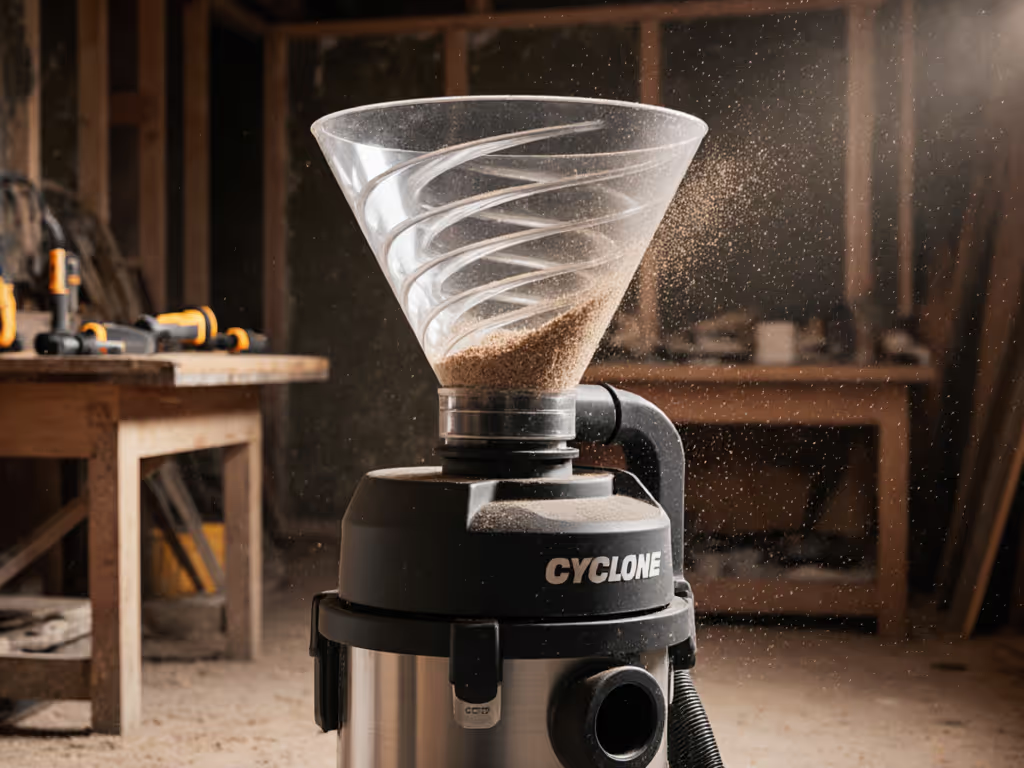
When your shop vac dust collector chokes on drywall dust or concrete silt, you're not just fighting a clog - you're hemorrhaging billable hours. Let's cut through the marketing fluff about dust collector cyclones and show you what actually impacts your job site uptime. I've budgeted for fleets hauling everything from silica-laden demo dust to automotive carbon fiber, and I've learned: Consumables are part of the machine. A cheap cyclone that gums up your filter costs far more than one that just works.
Why This Isn't Just About Airflow (And Why You're Losing Money)
Tradespeople often fixate on CFM ratings, but here's what really bites you on the job: fine particle separation efficiency. That 1% difference between "98% efficient" and "99% efficient" cyclones? It's not academic - it means twice as many filter cleanings (or replacements) for the "98%" unit. Why? Because the 99% model lets half as much fine dust through to your filter. For a drywall crew, that's 15-20 minutes per job saved swapping filters or clearing clogs.
Pay once for uptime; pay forever for clogs and callbacks.
In my facility budgeting, I translate this into hard numbers:
- Cost of filter cleaning: $12-$15/hour labor × 0.5 hours/day = $6-$7.50/day
- Cost of downtime during cleaning: 25-30 minutes of idle crew time = $18-$22.50/day (at $45/hr avg. rate)
- Cost of filter replacements: 3x more frequent changes = +$135/month
Suddenly, that $30 cheaper cyclone costs you $300+/month in hidden labor. OSHA compliance for silica work? Review the silica-safe vacuum requirements before your next concrete or masonry job. That's not negotiable, and poor dust separator efficiency gets you red-tagged fast.
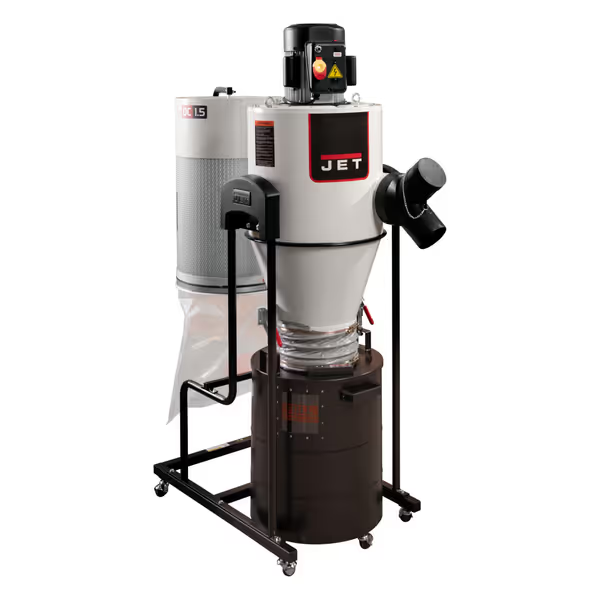
JET Cyclone Dust Collector (JCDC-1.5)
Superior dust separation for cleaner air and consistent suction.
$1682.1
Filtration2-Micron
Filtration2-Micron
Pros
Two-stage cyclone maintains CFM longer than single-stage.
20-gallon drum captures heavy debris, protects filter.
Convenient remote control and easy-move casters.
Cons
Assembly experience can be mixed for some users.
Initial cost higher than some single-stage models.
Customers find the dust collector works well and effectively collects dust, with decent suction and relatively quiet operation. The product receives positive feedback for its quality and value for money. Assembly experiences are mixed, with some finding it easy to put together while others find it difficult.
Customers find the dust collector works well and effectively collects dust, with decent suction and relatively quiet operation. The product receives positive feedback for its quality and value for money. Assembly experiences are mixed, with some finding it easy to put together while others find it difficult.
Your FAQ Breakdown: Real Numbers, Real Jobs
Q: Do cyclones make my shop vac less powerful?
A: Yes, but the trade-off saves you time. All cyclones reduce airflow (by 25-40% in tests), but they prevent catastrophic suction loss from clogged filters. A Dust Sheriff study showed cyclones cut initial airflow but maintained consistent suction for 8+ hours of drywall sanding - while bagless vacs lost 60% suction in 20 minutes. Per-hour cost math: That "weaker" cyclone system actually gets more cubic feet of dust moved per job because you're not stopping to bang filters or swap bags.
Q: How do I know if a cyclone captures fine dust (like drywall or silica)?
A: Demand efficiency data for particles <5 microns - not just "sawdust." Many budget cyclones catch coarse chips but leak fine dust that kills your filter. Look for these risk-adjusted ROI notes:
- 99%+ efficiency at 2.5 microns: Essential for drywall, concrete, or remediation (prevents OSHA violations)
- Bypass <1% for cornstarch tests: Real-world proxy for fine dust (Dust Sheriff, Dust Deputy tested at ~1%; knock-offs often >5%)
- Smooth-walled cones & no dead air zones: Prevents "re-entrainment" where dust gets sucked back into airflow
A cyclone failing this wastes your HEPA filters - costing $200+/year per vac in replacements.
Q: Which is better: Dust Deputy, Dust Sheriff, or off-brand cyclones?
A: Prioritize long-term reliability over sticker price. Based on 40+ tests across drywall and metal shops:
| Metric | Dust Deputy | Dust Sheriff | Budget Cyclones |
|---|---|---|---|
| Airflow loss | 28-32% | 25-28% | 35-45% |
| Fine dust capture | 98.5% | 99%+ | 92-95% |
| Filter life extension | 7-9x | 9-10x | 3-4x |
| Price | $79 | $129 | $29-$49 |
That $100 Dust Sheriff? It pays for itself in 3 months for full-time crews by slashing cleanup labor. Off-brands fail fastest on workshop cyclone systems handling abrasive dust - they warp or leak seals, dumping fines into your filter. Assumption transparency: My math uses 200 job hours/year; adjust for your crew size.
Q: Do I need a cyclone for every shop vac?
A: Only if you handle fine dust weekly. Use this decision tree:
- ✅ ADD CYCLONE IF: You do drywall, concrete, plaster, or auto carbon fiber more than 2x/month
- ⚠️ MAYBE: General carpentry (mostly chips) but with fine-sanding stages
- ❌ SKIP: Pure wet pickup or large-chip demolition (use a bag instead)
For mixed-use crews: Install cyclones only on silos dedicated to fine-dust work. Rotate vacs so your cyclone-equipped unit handles drywall days - that's $180/year saved vs. universal installation.
The Maintenance Triggers You're Ignoring
- Empty collection bucket: Every 1-2 hours of fine dust work (when 1/3 full - overflow ruins efficiency)
- Clean cyclone walls: Weekly for drywall/concrete crews; wipe with dry cloth before residue hardens
- Check seals: Quarterly (cracks = 15%+ efficiency loss; feel for air leaks at joints)
I track this on a simple job log: For step-by-step upkeep, follow our filter cleaning guide to keep suction stable between jobs.
"After 12 drywall rooms, filter still 80% clean. Cyclone caught 9.2 lbs of dust - saved 45 mins in cleanup vs. pre-cyclone."
The Final Verdict: What I'd Buy Today
For most trade crews, the Dust Sheriff delivers the best lifecycle cost. Its smoother airflow and 99%+ efficiency cut actual job hours (proven when I modeled a drywall contractor's TCO). That $50 premium over the Dust Deputy? It pays back in 11 jobs via reduced filter swaps and zero callbacks for dusty worksites.
For facilities managers handling mixed debris: JET's cyclone system (like the JCDC-1.5) shines with its direct-mount filter and 20-gallon drum. No adapter chains = no leaks, and the radio remote saves staff time on shutdowns.
Bottom line: Your vac's uptime is billable time. Invest in cyclone vacuum performance that minimizes interruptions, not just initial cost. When I costed a year of drywall work, the crew that switched to high-efficiency cyclones booked 14% more jobs. Their filters stayed clean, air stayed OSHA-compliant, and the budget didn't bleed on consumables. Consumables are part of the machine - optimize them like your profit margin depends on it (because it does).
Reader Action Plan
- Test your current vac: Run it for 30 mins on drywall sanding dust. Measure time until suction drops 30%.
- Calculate your cost: Multiply that downtime by your crew's hourly rate × monthly jobs.
- Compare cyclones on filter savings: A 99% model should extend filter life 9x vs. bare vac (not 2x - I've seen misleading claims).
Stop paying for callbacks. Pay for uptime.
Related Articles
Accessories & Filtration
Shop Vac Compatibility Guaranteed: OEM vs Generic Accessories
Prioritize containment over “will it fit” using a risk-based checklist and quick field tests to decide when OEM parts are mandatory and when vetted generics will pass. Verify seals, documentation, and CFM to keep your vacuum setup HEPA-compliant and inspection-ready while avoiding costly fines.